
Property complex regimes in Spain in 2026: the LPH Article 24 complejo inmobiliario for mixed-use urbanisations
The complejo inmobiliario under LPH Article 24 governs multi-community urbanisations in Spain. Here is how the agrupacion works and who pays.
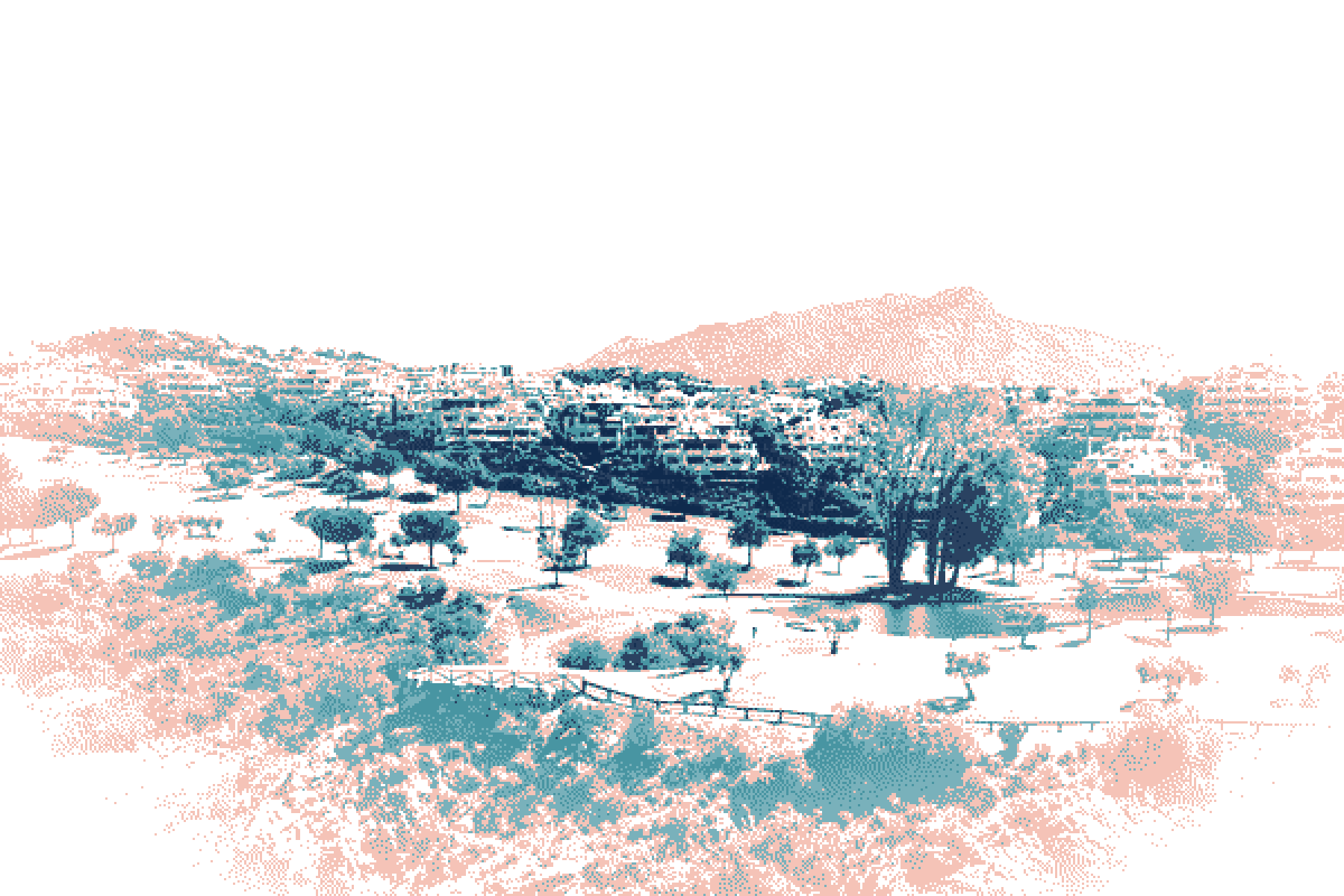
A legal framework for multi-community urbanisations: golf resorts, gated estates and residential complexes where several comunidades share roads, gardens and security infrastructure.
The complejo inmobiliario (complex property regime) is the legal structure under Spanish law that governs urbanisations where two or more independent buildings or parcels share common infrastructure: roads, gardens, security gates, sports facilities or drainage systems. It is set out in Article 24 of the Ley de Propiedad Horizontal (LPH, Ley 49/1960), a chapter added by the Ley 8/1999 reform to address the reality of large residential complexes that do not fit the standard single-building comunidad model. If you own a property on a Costa del Sol golf resort or a gated estate with multiple phases, this is likely the regime that structures your ownership and determines who decides what.
What exactly is a complejo inmobiliario under the LPH?
A complejo inmobiliario is a private complex of two or more independent buildings or parcels, primarily residential, whose owners share indivisible common elements. Under LPH Article 24.1, two requirements must be met: the complex must be integrated by two or more edifications or parcels independent from each other, and the owners must hold an inherent, indivisible co-ownership of shared elements such as roads (viales), installations or services. This distinguishes it from a standard propiedad horizontal, which covers a single building divided into flats. The complejo inmobiliario covers sprawling residential layouts, from a cluster of townhouse blocks sharing a pool to a full golf resort with five distinct phases, each with its own comunidad, all sharing a perimeter road and a security gatehouse.
The LPH also recognises subcomunidades in Article 2.d): when the constitutive title gives several owners exclusive use of certain common elements with functional or economic unity, a sub-community forms within the larger structure. A block of apartments with its own lift and entrance hall, inside a larger urbanisation, is a typical subcomunidad.
How can a complex organise itself: single comunidad or agrupacion?
Article 24.2 gives the complex two legal forms. The first option under 24.2.a is to constitute a single comunidad de propietarios using the procedures in Article 5. In this case the entire LPH applies in full: one Junta, one president, one administrator, one budget and one reserve fund. This works for smaller complexes where owners are happy to merge everything into a single governance structure.
The second option under 24.2.b is to constitute an agrupacion de comunidades de propietarios, a grouping of pre-existing comunidades. The constitutive title is granted by the sole owner of the complex or by the presidents of all the comunidades involved, each previously authorised by a majority vote of their own Junta. The title must describe the complex as a whole, list the shared elements, roads, installations and services, and fix the participation quota of each integrated community. Each community is jointly liable for its share of the super-community’s general expenses. The title and statutes are registrable in the Land Registry (Registro de la Propiedad).
The choice between these two forms has practical consequences for governance, fee allocation and majority requirements, summarised below.
| Feature | Single comunidad (Art 24.2.a) | Agrupacion de comunidades (Art 24.2.b) |
|---|---|---|
| Governance | One Junta of all owners | Super-Junta of sub-community presidents |
| Owner voting | Each owner votes directly | Presidents represent their communities |
| Reserve fund | Mandatory 10 per cent (Art 9.1.f) | Optional unless Junta agrees (Art 24.3.c) |
| Qualified majorities | Standard LPH Art 17 rules | Must first pass in each sub-community Junta (Art 24.3.b) |
| Competence scope | All common elements | Shared elements only; sub-communities keep autonomy |
| Budget | One budget for all | Super-budget for shared costs only |
Does the 2025 tourist-let rule apply inside a complejo inmobiliario?
Yes, and this is one of the most important developments since the Ley Organica 1/2025 reformed the LPH. The 2025 reform added Article 7.3 (requiring prior express community approval for tourist-let activity) and modified Article 17.12 (setting the three-fifths majority threshold for approving, limiting, conditioning or prohibiting tourist lets) with effect from 3 April 2025. Neither provision modified Article 24 directly, but Article 24.2.a states that a complejo inmobiliario constituted as a single comunidad is subject to the full LPH “que les resultara integramente de aplicacion” (which applies to them in its entirety). That remission includes Article 17.12.
The DGSJFP resolution of 22 September 2025 confirmed this expressly. The case involved a property in Ogijares (Granada) within a horizontal property regime, where the owner argued the property was not part of a comunidad and therefore the Article 17.12 community vote should not apply. The DGSJFP rejected this, holding that the property was part of a registered propiedad horizontal and that the Article 17.12 requirement applied. The resolution noted that even if the property were considered part of a complejo inmobiliario privado, Article 24.2.a “recoge una remision total al regimen aplicable a la propiedad horizontal, lo cual incluye el articulo 17.12 del citado cuerpo normativo”. This is the definitive administrative interpretation: the 2025 tourist-let community vote applies inside a complejo inmobiliario constituted as a single comunidad.
For an agrupacion de comunidades, the position is more nuanced. The super-community’s Junta (composed of sub-community presidents) has competence only over shared elements, not over tourist-let decisions internal to each sub-community. Each sub-community would apply the Article 17.12 three-fifths vote within its own Junta for properties in its buildings. If the tourist activity affects shared infrastructure (for example, a short-term rental generating disproportionate traffic through a shared security gate), the super-community could address it under its shared-element competence, but the tourist-let approval itself sits at the sub-community level.
The tourist licence application process in Andalusia now requires this community vote alongside the municipal compatibility licence, so a buyer planning a tourist let on a complex should check both the sub-community’s position and, where relevant, the agrupacion’s rules on shared-element use.
How does the agrupacion de comunidades governance work?
The agrupacion has the same legal standing as a comunidad de propietarios and is governed by the LPH with three key specialities set out in Article 24.3. First, the Junta is composed, unless the statutes say otherwise, of the presidents of each integrated community. Each president represents all the owners of their community, so an individual owner does not vote at the super-community level. This is a cascade representation model: you elect your comunidad’s president, and that president sits on the agrupacion’s Junta.
Second, for decisions requiring qualified majorities under the LPH (three-fifths for new services or structural works, for example), the majority must first be obtained in each of the individual Juntas of the integrated communities, not just at the super-community level. This is a double-majority requirement that gives each sub-community an effective veto on major decisions. A golf resort’s agrupacion cannot, for instance, authorise an expensive new security system if one of its five sub-communities votes against it in its own Junta.
Third, the super-community’s competence is limited. Article 24.3 states that the governance organs of the agrupacion have authority only over shared elements: roads, installations and common services. Their agreements cannot undermine the powers of the sub-communities’ own governance organs. Your community’s decision about its own lift repair, its own hallway decoration or its own internal budget remains its own business. The community governance and voting page explains how voting works within a single comunidad, which is the foundation layer.
Who pays for shared infrastructure in a complex?
The constitutive title fixes the participation quota of each integrated community in the agrupacion’s expenses. Each community is jointly liable for its share. The super-community budgets for shared costs: the perimeter road, the security gate, communal gardens that serve all phases, shared pumping stations. Each sub-community then collects its share from its own owners according to their individual cuotas within that community.
This two-layer fee structure means an owner on a complex pays community fees twice: once to their own comunidad for building-specific costs, and once (through their comunidad’s contribution to the agrupacion) for shared infrastructure. The community fees post covers the standard fee structure within a single comunidad. On a complejo inmobiliario, you pay into that structure plus the agrupacion layer on top.
The reserve fund deserves particular attention. Under Article 24.3.c, the mandatory 10 per cent reserve fund in Article 9.1.f does not automatically apply to the agrupacion unless the Junta agrees otherwise. Each sub-community must still maintain its own mandatory reserve fund for its building, but the super-community’s reserve for shared infrastructure is optional. This is a gap many complexes leave unaddressed, meaning shared roads or security infrastructure may have no ring-fenced fund for major repairs. The community reserve fund page explains how the 10 per cent minimum works for a standard comunidad.
What is the difference between a complejo inmobiliario and a complejo urbanistico?
These two terms are often confused, but they govern different legal dimensions of a complex. The complejo inmobiliario is an LPH governance concept: it defines how co-owners manage shared elements under Article 24. The complejo urbanistico is an urban-planning concept under the Ley de Suelo y Rehabilitacion Urbana (RDL 7/2015, Art 26.6), which requires administrative licensing for the constitution or modification of a complex.
The LPH itself cross-references the Ley de Suelo in Article 10.3.a, which states that the constitution and modification of a complejo inmobiliario is subject to the administrative authorisation regime set out in Article 26.6 of the Ley de Suelo, “en sus mismos terminos” (on the same terms). This means a developer constituting a complejo inmobiliario may need both the urban-planning licence (complejo urbanistico authorisation under the Ley de Suelo) and the horizontal-property constitution (complejo inmobiliario under the LPH). The two are not alternatives: they regulate different aspects of the same physical reality.
The key practical distinction is that the complejo urbanistico licensing is a public-law requirement (the administration must authorise the physical and planning configuration of the complex), while the complejo inmobiliario is a private-law governance structure (the owners decide how to manage shared elements among themselves). A single physical site can be both: a gated golf resort that required a municipal licence to constitute as a complex (complejo urbanistico) and whose owners then adopted an agrupacion de comunidades to govern shared roads and security (complejo inmobiliario).
What are the three community regimes and how do they compare?
Spanish law provides several overlapping frameworks for shared property ownership. Understanding which one applies to your urbanisation determines your governance rights, fee obligations and majority thresholds. The table below compares the three most relevant regimes.
| Feature | Standard LPH comunidad | Complejo inmobiliario (Art 24.2.a, single) | Complejo inmobiliario (Art 24.2.b, agrupacion) |
|---|---|---|---|
| Legal basis | LPH Art 5 (standard constitution) | LPH Art 24.2.a (single comunidad within a complex) | LPH Art 24.2.b (super-community of comunidades) |
| Physical structure | One building, divided into flats or locales | Two or more buildings/parcels sharing common elements | Two or more pre-existing comunidades sharing infrastructure |
| Governance | One Junta, all owners vote | One Junta, all owners vote (same as standard) | Super-Junta of sub-community presidents |
| Tourist-let vote (Art 17.12) | Three-fifths of owners and quotas | Three-fifths of owners and quotas (confirmed by DGSJFP, Sep 2025) | Each sub-community applies Art 17.12 in its own Junta |
| Reserve fund | Mandatory 10 per cent | Mandatory 10 per cent | Optional for the agrupacion; mandatory for each sub-community |
| Qualified majorities | Standard Art 17 thresholds | Standard Art 17 thresholds | Double-majority: must pass in each sub-community first |
| Administrative licensing | Not required for standard constitution | Ley de Suelo Art 26.6 licensing may apply | Ley de Suelo Art 26.6 licensing may apply |
| Registry inscription | Optional but recommended | Constitutive title registrable | Constitutive title and statutes registrable |
A mixed-use development, which combines residential, commercial and hotel components within a single complex, will typically use the agrupacion form. The residential phases each constitute their own comunidad with their own Juntas, while the commercial and hotel operators participate in the super-community for shared infrastructure (access roads, parking, security). The residential owners’ exposure to the commercial component’s costs is limited to the participation quota fixed in the constitutive title, and the super-community cannot override a residential comunidad’s internal governance.
What happens if a complex has no formal constitution?
Article 24.4 provides a safety net. If a complejo inmobiliario does not adopt either the single-community or agrupacion form, the LPH applies supletoriely, subject to whatever agreements the co-owners have established among themselves. The special rules for agrupaciones (presidents on the Junta, double majority, reserve fund optionality) apply by default. This means even an informal complex, where neighbours have simply agreed to share a private road maintenance cost, is legally governed by the LPH framework.
In practice, many older Costa del Sol urbanisations operate under informal arrangements that pre-date the 1999 reform. A 2021 resolution by the Spanish land registry authority (Dirección General de Seguridad Juridica y Fe Publica, published by the Madrid registrars’ association) confirmed that the constitution of a complejo inmobiliario is registrable in the Land Registry, providing legal certainty to owners and prospective buyers.
How does this affect a buyer on a Costa del Sol urbanisation?
If you are buying on a golf resort or a large gated estate, due diligence should include asking whether the complex is constituted as a single comunidad, an agrupacion, or an informal arrangement. The answer determines your fee exposure (one layer or two), your voting rights (direct or through your president), and the quality of the reserve fund for shared infrastructure. The property registration process in Spain records the constitutive title, and a nota simple from the Land Registry will show whether the complex is formally registered.
For non-resident owners, the agrupacion model has a practical governance implication. You vote for your community’s president, who then represents you at the super-community level. You cannot directly influence decisions about the shared road or the security gate, except through your community’s president. Understanding this cascade is essential for owners who want a say in how shared infrastructure is maintained and funded. The community meetings page explains the meeting types within a single comunidad, which is the foundation layer.
If you plan a tourist let on a property within a complex, you need the Article 17.12 three-fifths community vote regardless of whether the complex is a single comunidad or an agrupacion. The DGSJFP confirmed in September 2025 that the full LPH, including the tourist-let rule, applies to a complejo inmobiliario constituted as a single comunidad. For an agrupacion, the vote is required at the sub-community level. Check the Andalusian tourist licence process for the full regulatory requirements, which now include the municipal compatibility licence alongside the community vote.
How does the complejo inmobiliario relate to the standard LPH?
The complejo inmobiliario is not a separate law. It is a chapter (Chapter III) within the same Ley 49/1960 that governs all horizontal property in Spain. The LPH itself sets out the standard comunidad framework: obligations of owners, governance organs, voting majorities, the reserve fund, debt collection. The complejo inmobiliario chapter adds the superstructure for complexes that need it, layering an agrupacion on top of existing comunidades.
Article 2 of the LPH lists the entities the law applies to: standard comunidades (2.a), informal comunidades meeting the Civil Code Article 396 requirements (2.b), complejos inmobiliarios privados (2.c), subcomunidades (2.d) and urban conservation entities (2.e). The complejo inmobiliario is one of several legal forms the LPH accommodates, each addressing a different physical reality of shared ownership.
Frequently asked questions
- What is a complejo inmobiliario in Spanish law?
- A complejo inmobiliario is a private complex of two or more independent buildings or parcels, mainly residential, whose owners share indivisible common elements such as roads, gardens, security infrastructure or sports facilities. It is governed by Article 24 of the Ley de Propiedad Horizontal (Ley 49/1960), a chapter added by the 1999 reform.
- How does an agrupacion de comunidades differ from a single comunidad?
- An agrupacion de comunidades is a super-community of several pre-existing comunidades. Each sub-community retains its own Junta, president and administrator for its internal matters, while the agrupacion manages only shared infrastructure. A single comunidad merges everything under one governance structure with no sub-community autonomy.
- Does the 2025 tourist-let community vote apply inside a complejo inmobiliario?
- Yes. Under Article 24.2.a, a complejo inmobiliario constituted as a single comunidad is subject to the full LPH, which now includes Article 17.12 (the three-fifths tourist-let vote added by LO 1/2025, in force from 3 April 2025). The DGSJFP resolution of 22 September 2025 confirmed this remission expressly.
- Who sits on the Junta of an agrupacion de comunidades?
- Under LPH Article 24.3.a, the Junta of the agrupacion is composed, unless otherwise agreed, of the presidents of each integrated community. Each president represents all the owners of their respective community, so individual owners do not vote directly at the super-community level.
- Is the 10 per cent reserve fund mandatory for an agrupacion de comunidades?
- No. Under LPH Article 24.3.c, the reserve fund requirement in Article 9 does not automatically apply to an agrupacion unless the Junta agrees otherwise. Each sub-community must still maintain its own mandatory 10 per cent reserve fund for its own building.
- What is the difference between a complejo inmobiliario and a complejo urbanistico?
- A complejo inmobiliario is an LPH governance regime (Article 24) for how co-owners manage shared elements. A complejo urbanistico is an urban-planning concept under the Ley de Suelo (RDL 7/2015, Art 26.6) that requires administrative licensing for the constitution or modification of the complex. The two can overlap on the same physical site but govern different legal dimensions.
Sources and data
- Ley 49/1960, de 21 de julio, sobre propiedad horizontal (consolidated text, updated 21 March 2026) — BOE
- Ley 8/1999, de 6 de abril, de Reforma de la Ley 49/1960 sobre Propiedad Horizontal — BOE
- Ley Organica 1/2025, de 2 de enero, de medidas en materia de eficiencia del Servicio Publico de Justicia (Disposicion Final Cuarta, LPH reform) — BOE
- Resolucion de 22 de septiembre de 2025, de la Direccion General de Seguridad Juridica y Fe Publica (BOE-A-2026-296) — BOE
- Real Decreto Legislativo 7/2015, de 30 de octubre, por el que se aprueba el texto refundido de la Ley de Suelo y Rehabilitacion Urbana (Art 26.6, complejo urbanistico) — BOE