Living in Nueva Andalucia in 2026: Golf Valley Lifestyle, Amenities and Daily Life
Living in Nueva Andalucia in 2026: schools, the new health centre, transport, restaurants and daily life in Marbella's Golf Valley district.
Nueva Andalucía is Marbella’s Golf Valley, a residential district of 22,677 residents (INE padron, January 2025) that rises behind Puerto Banús in the western half of the municipality. Nearly half the population holds foreign citizenship, and the area supports year-round living with international schools, a new public health centre opened in March 2026, supermarkets, restaurants and a 5 to 10 minute drive to the beach. This guide covers what daily life actually looks like for a resident: the schools, healthcare, transport, shopping, restaurants and community networks that make the Golf Valley a place to live, not just a place to own property. For the purchase process and taxes, see the companion Nueva Andalucía buying guide; for the course-by-course character and sub-pocket analysis, the Nueva Andalucía Golf Valley area guide.
Who lives in Nueva Andalucía and what is the community profile?
Nueva Andalucía is one of the most international communities in southern Spain. The INE padron for January 2025 records 22,677 residents in the locality, up from 18,652 in 2020 and 14,441 in 2010 (Instituto Nacional de Estadística, municipal register). Of the 2024 estimate, 11,130 residents held foreign citizenship against 11,547 Spanish, meaning nearly half the district is international. The age structure skews towards working-age families: 3,882 residents aged 0 to 14, 15,667 aged 15 to 64, and 3,128 aged 65 and over (Instituto Nacional de Estadística).
That demographic mix shapes everything from the school catchments to the restaurant calendars. The largest foreign communities in Marbella as a whole are Moroccan, British, Ukrainian, Colombian and Russian (SUR in English, town hall padron data, February 2026), and the Golf Valley’s international character means English, Swedish, Arabic and French are commonly heard alongside Spanish. Marbella’s total population reached 173,420 in January 2026, with foreign nationals accounting for 36.45 per cent of all residents (SUR in English, town hall data). Nueva Andalucía sits at the more international end of that spectrum.
The community feel is residential rather than resort. Unlike Puerto Banús, which is built around the marina and nightlife, Nueva Andalucía is where people live, send children to school, do weekly shopping and build social networks through golf club memberships and school parent communities. The Marbella living guide covers the wider municipal context.
What schools serve families living in Nueva Andalucía?
Schools are the single biggest pull factor for families relocating to the Golf Valley. Three established international schools sit within a 10 minute drive of the district centre, offering British, IB and Spanish international curricula.
| School | Location | Curriculum | Ages | Founded | Notable |
|---|---|---|---|---|---|
| Aloha College | Nueva Andalucía (El Angel) | British + IB Diploma | 3 to 18 | 1982 | Not-for-profit foundation, 900+ students, 57 nationalities |
| Swans International School | Golden Mile | British + IB | 3 to 18 | 1971 | Primary and secondary, bilingual English-Spanish |
| Laude San Pedro International College | San Pedro Alcantara | British + Spanish | 3 to 18 | 2005 | Round Square member, large campus |
Aloha College is the anchor school within the district itself. Founded in 1982 as a not-for-profit educational foundation, it offers a British international education from Early Years through Sixth Form, with IGCSE, A-Level and IB Diploma pathways. The school has over 900 students representing 57 nationalities and is governed by a board of parent trustees, with all surplus reinvested into facilities and teaching (Aloha College). Its location in the El Angel urbanisation puts it within walking distance of the Aloha Golf Club and the residential pockets around it, which is why families buying in Aloha, Las Brisas or Los Naranjos cite school proximity as a primary reason for choosing the area.
Swans International School, on the Golden Mile about 5 minutes east by car, is the second major British-curriculum option, offering both primary and secondary education with IB Diploma provision in the sixth form. Laude San Pedro International College in neighbouring San Pedro Alcantara is within 10 minutes and offers a combined British and Spanish curriculum. For a full comparison of Marbella’s international school landscape, the best areas to live on the Costa del Sol guide places Nueva Andalucía’s school cluster in the wider regional context.
What healthcare is available to residents?
Nueva Andalucía gained a significantly upgraded public health facility in March 2026, when the old clinic was transformed into a full health centre. The 7.4 million EUR centre, the last new infrastructure programmed as part of Marbella’s health map transformation plan, was opened by the regional health minister Antonio Sanz and mayor Ángeles Muñoz (SUR in English, 19 March 2026). The renovation expanded the facility from 8 to 19 consultation rooms and added family medicine, nursing and paediatrics services. Staffing includes six family doctors, two paediatricians, six nurses, an auxiliary nursing care technician, an administrative assistant and an orderly. The centre is equipped with an electrocardiograph and a diagnostic ultrasound scanner advanced enough to support artificial intelligence in diagnostic processes (SUR in English, reporting Junta de Andalucía and Ayuntamiento de Marbella).
The district’s population had doubled to more than 14,000 people in the catchment area, according to the mayor, which was the driver for the upgrade (SUR in English).
| Facility | Type | Distance from Nueva Andalucía centre | Key services |
|---|---|---|---|
| Nueva Andalucía health centre | Public (SAS) | Within the district | Family medicine, paediatrics, nursing, diagnostic ultrasound |
| Hospital Universitario Costa del Sol | Public (SAS) | ~10 min east on A-7 | 400 beds, 24h emergency, surgery, full specialist departments |
| Hospital Quironsalud Marbella | Private | ~5 min east | 24h emergency, specialist departments |
| HC Marbella | Private | ~5 min south near Puerto Banús | 24h emergency, imaging, outpatient clinics |
Hospital Universitario Costa del Sol, the main public hospital, sits on the A-7 coast road about 7 kilometres east of Marbella centre near Los Monteros. It has 400 beds and a 24-hour accident and emergency department, with a catchment area covering the municipal districts of Benahavís, Casares, Estepona, Fuengirola, Istan, Manilva, Marbella, Mijas and Ojén (Servicio Andaluz de Salud, Junta de Andalucía). The hospital’s new extension opened in March 2025, adding outpatient and oncology facilities. Private hospital options within a short drive include Hospital Quironsalud Marbella and HC Marbella near Puerto Banús.
How do you get around Nueva Andalucía and the wider area?
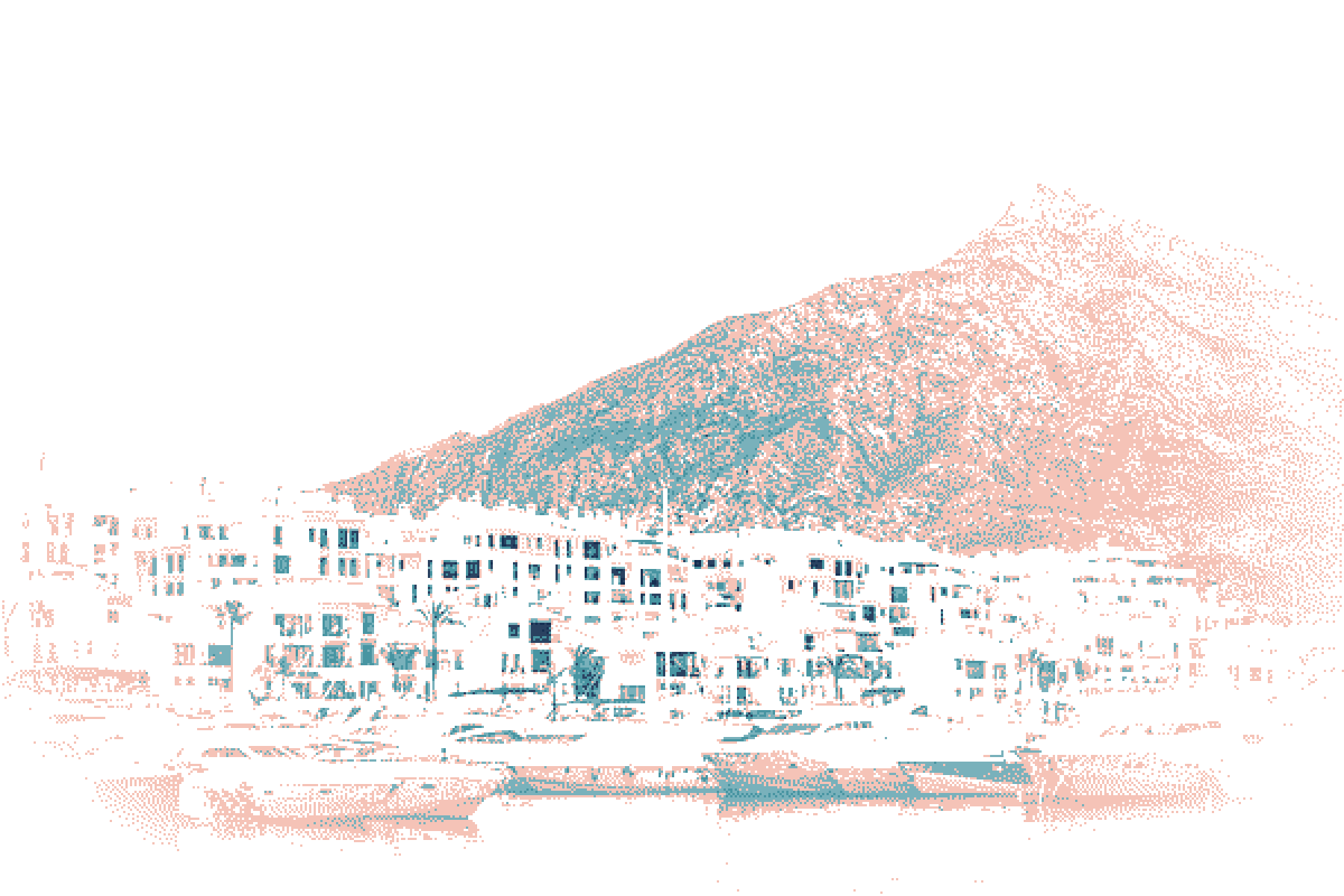
The district sits between the AP-7 toll motorway to the north and the N-340 coastal road (now signed as the A-7) to the south, with La Concha mountain forming the northern backdrop. Puerto Banús and the nearest beaches are a 5 to 10 minute drive south. San Pedro Alcantara, with its recently completed boulevard tunnel under the A-7, is about 5 minutes west. Marbella’s old town is roughly 10 minutes east.
| Destination | Distance from Nueva Andalucía centre | Drive time | Public transport |
|---|---|---|---|
| Puerto Banús marina | ~3 km | 5 to 10 min | Taxi, limited bus |
| San Pedro Alcantara centre | ~4 km | 5 min | Bus line 13 |
| Marbella old town | ~8 km | 10 min | Bus line 12 via central Marbella |
| Hospital Costa del Sol | ~10 km | 10 min east on A-7 | Bus line 12 |
| La Cañada shopping centre | ~3 km | 5 min east | Bus lines 6, 12 |
| Málaga airport | ~62 km | 50 min via AP-7 | Coach from Marbella bus station |
Marbella’s municipal bus network, operated by Avanza Grupo, runs several lines through or near Nueva Andalucía. Line 12 connects the Costa del Sol Hospital through central Marbella to Nueva Andalucía, and line 13 connects the hospital to San Pedro (Avanza Grupo, Urbanos de Marbella). Line 6 runs from Cabopino through the hospital and centre to La Cañada. These are useful for specific trips, but the district’s residential spread across golf-course urbanisations means a car is the practical default for daily life. Most households have at least one vehicle, and the AP-7 toll motorway provides fast access to Málaga airport (about 62 kilometres, 50 minutes) and to Estepona and Sotogrande to the west.
Where do residents shop and eat in Nueva Andalucía?
Daily shopping and dining in the Golf Valley revolve around two commercial hubs. Centro Plaza, on Avenida Manolete at the heart of the district, is a commercial centre with boutiques, restaurants, a supermarket and a weekly Saturday market that draws visitors from across Marbella. The Saturday market at Centro Plaza is one of the most established on the Costa del Sol, with stalls selling clothing, leather goods, crafts and food (Spanish Local Markets). Restaurants cluster around Centro Plaza and along Avenida de las Palmeras, running from casual chiringuitos to established international dining.
| Shopping hub | Location | What it offers |
|---|---|---|
| Centro Plaza | Heart of Nueva Andalucía | Boutiques, restaurants, supermarket, Saturday market |
| La Cañada shopping centre | Marbella bypass, ~5 min east | 150+ shops, Alcampo supermarket, cinema, bowling, free parking |
| Supersol Nueva Andalucía | Avenida de las Palmeras | Daily groceries, proximity to residential pockets |
| Spisa Foodmarket | Marbella (Scandinavian) | Swedish and Nordic groceries, deli, bakery |
La Cañada, the largest shopping centre on the Costa del Sol, sits on the Marbella bypass about 5 minutes east of Nueva Andalucía. It has over 150 shops including high-street brands, an Alcampo hypermarket, a multiplex cinema and a ten-pin bowling alley, with free parking (My Guide Marbella). For daily groceries, several supermarkets operate within and around the district, including Supersol on Avenida de las Palmeras. The Scandinavian community is served by Spisa Foodmarket, which stocks over 6,000 Nordic products.
The restaurant scene runs year-round, unlike more seasonal coastal pockets. The concentration of permanent international residents means restaurants stay open through winter, and the mix ranges from Spanish tapas and Italian to Thai, Japanese and Scandinavian. The Marbella buying guide covers the residential character in more detail for buyers weighing where in the municipality to settle.
What is daily life like across the Golf Valley sub-pockets?
Nueva Andalucía is not a single neighbourhood but a cluster of sub-pockets around the four golf courses, each with a distinct daily rhythm. The Golf Valley area guide covers the course architecture and character in depth; here the focus is what it is like to live in each pocket.
Aloha is the most walkable pocket, built around the Aloha Golf Club and Centro Plaza. Residents can walk to shops, restaurants and the Saturday market, which is unusual for the Golf Valley. The tree-lined streets and the mix of apartments, townhouses and villas create a village feel that appeals to year-round residents, particularly families with children at Aloha College.
Las Brisas is the most private and quietest pocket. Wrapped around the Real Club de Golf Las Brisas, the urbanisation is dominated by larger villas on generous plots, many with direct golf frontage. The privacy of the members club shapes the atmosphere: low-key, exclusive and residential, with little through traffic. Daily life here is car-dependent for shopping and schools.
Los Naranjos sits in the heart of the valley around the Los Naranjos Golf Club, with a mix of apartments and villas among the orange groves that give the area its name. It is the most accessible pocket for buyers who want golf proximity without the premium of Las Brisas, and the urbanisation has a more open, community feel than the private clubs.
Rodeo Alto-Guadaiza on the western edge is the value entry point, with registered notarial prices at 3,009 EUR per m2 across all property types (Consejo General del Notariado, July 2026). It is further from the golf courses and Centro Plaza, making it more car-dependent, but the price step-down attracts buyers prioritising space over walkability. For the price data, see the Nueva Andalucía property prices data post.
How does the Golf Valley lifestyle compare to other Marbella areas?
The Golf Valley’s appeal is the combination of residential infrastructure and proximity to Puerto Banús. Buyers weighing it against other Marbella pockets are usually comparing three things: lifestyle, price and convenience.
| Area | Lifestyle character | Registered notarial price (all types, EUR per m2, July 2026) | Distance to Puerto Banús |
|---|---|---|---|
| Nueva Andalucía (Golf Valley) | Residential, golf-focused, international | 4,293 | 5 to 10 min drive |
| Puerto Banús | Marina, nightlife, transient | 5,494 | Walkable |
| San Pedro Alcantara | Traditional Spanish town, family-oriented | Lower than Golf Valley | 5 min drive |
| Golden Mile | Prime coastal, hotel and resort | Higher than Golf Valley | 5 min drive |
| La Quinta (Benahavís) | Resort, golf, elevated views | 5,078 | 10 to 15 min drive |
The Golf Valley is the value gateway to Marbella’s prime west. Registered notarial prices averaged 4,293 EUR per m2 across all property types in July 2026, compared with 5,494 EUR per m2 in Puerto Banús (notarial figures from the Consejo General del Notariado). The 22 per cent step-down from Puerto Banús to the Golf Valley reflects the difference between marina-front and residential golf-side living. Buyers who want the nightlife and marina within walking distance choose Puerto Banús; buyers who want a quieter residential base a few minutes away choose Nueva Andalucía. The costa del sol golf guide places the Golf Valley’s four courses in the wider regional golf landscape.
What should a resident consider before moving to Nueva Andalucía?
Three practical considerations shape the move. First, the sub-pocket matters as much as the property: a villa in Las Brisas and an apartment in Aloha Gardens are both Nueva Andalucía addresses, but the daily life, walkability and school proximity are materially different. Buyers should visit the specific urbanisation, not just the district.
Second, a car is the practical default. The municipal bus lines serve key destinations but the residential spread across golf-course urbanisations means most daily trips, from school runs to supermarket visits, are faster and easier by car. Households typically need at least one vehicle, and the AP-7 provides fast access to the airport and the wider coast.
Third, the international character is a genuine lifestyle advantage, not just a marketing point. Nearly half the district’s 22,677 residents hold foreign citizenship, and the year-round school calendars, restaurant openings and community networks reflect that. A family relocating from the UK, Scandinavia or the Middle East will find the adjustment smoother here than in more traditionally Spanish barrios, but the trade-off is a less immersive Spanish-language environment than in San Pedro Alcantara or Marbella’s old town.
For the registered notarial sale prices that anchor a purchase decision, the companion Nueva Andalucía property prices data post provides the figures. For the purchase process, taxes and legal steps, the Nueva Andalucía buying guide covers the full transaction.
Frequently asked questions
- Is Nueva Andalucía a good place to live year round?
- Yes. The district has 22,677 registered residents (INE, 2025), nearly half foreign, and supports year-round living with a new public health centre opened in March 2026, international schools including Aloha College, supermarkets, pharmacies and restaurants that stay open through winter. The residential infrastructure is what separates it from more seasonal parts of the coast.
- How far is Nueva Andalucía from the beach and Puerto Banús?
- Nueva Andalucía sits directly behind Puerto Banús, with the nearest beaches a 5 to 10 minute drive. The marina, with its restaurants, nightlife and retail, is the same distance. Málaga airport is about 62 kilometres or a 50 minute drive via the AP-7 toll motorway.
- Which schools serve families living in Nueva Andalucía?
- Aloha College, a not-for-profit British international school founded in 1982, sits in the heart of the district with over 900 students from 57 nationalities offering IGCSE, A-Level and IB pathways. Swans International School on the Golden Mile is about 5 minutes away by car, and Laude San Pedro International College in San Pedro Alcantara is within 10 minutes.
- What healthcare is available to residents of Nueva Andalucía?
- A new 7.4 million EUR public health centre opened in March 2026, replacing the old clinic with 19 consultation rooms, six family doctors, two paediatricians and six nurses. Hospital Universitario Costa del Sol, the main public hospital with 400 beds and a 24-hour emergency department, is a short drive east on the A-7. Private options include Hospital Quironsalud Marbella and HC Marbella near Puerto Banús.
- Can you live in Nueva Andalucía without a car?
- It is possible but not ideal. Marbella's municipal bus line 12 connects the Costa del Sol Hospital through central Marbella to Nueva Andalucía, and line 13 connects to San Pedro. Centro Plaza and the immediate Aloha area have walkable shops and restaurants, but the district is spread across golf-course urbanisations where a car is the practical default.
- What is the community feel like in Nueva Andalucía?
- The district is residential rather than resort. Nearly half the 22,677 residents hold foreign citizenship, creating a genuinely international community where English, Swedish, Arabic and French are heard alongside Spanish. The Saturday market at Centro Plaza, the golf club memberships and the school networks form the social backbone for permanent residents.
Sources and data
- Malaga: Poblacion por municipios y sexo. Revision del Padron Municipal — Instituto Nacional de Estadistica
- The Nueva Andalucia clinic in Marbella is transformed into a health centre — Sur in English
- Hospital Universitario Costa del Sol — Servicio Andaluz de Salud (Junta de Andalucia)
- About Us - Aloha College — Aloha College
- Todas las lineas - Urbanos de Marbella — Avanza Grupo (Urbanos de Marbella)
- Marbella population 2025: 90% of new residents are foreigners — Sur in English (source: Marbella town hall padron)
- La Cañada Shopping Centre — My Guide Marbella