
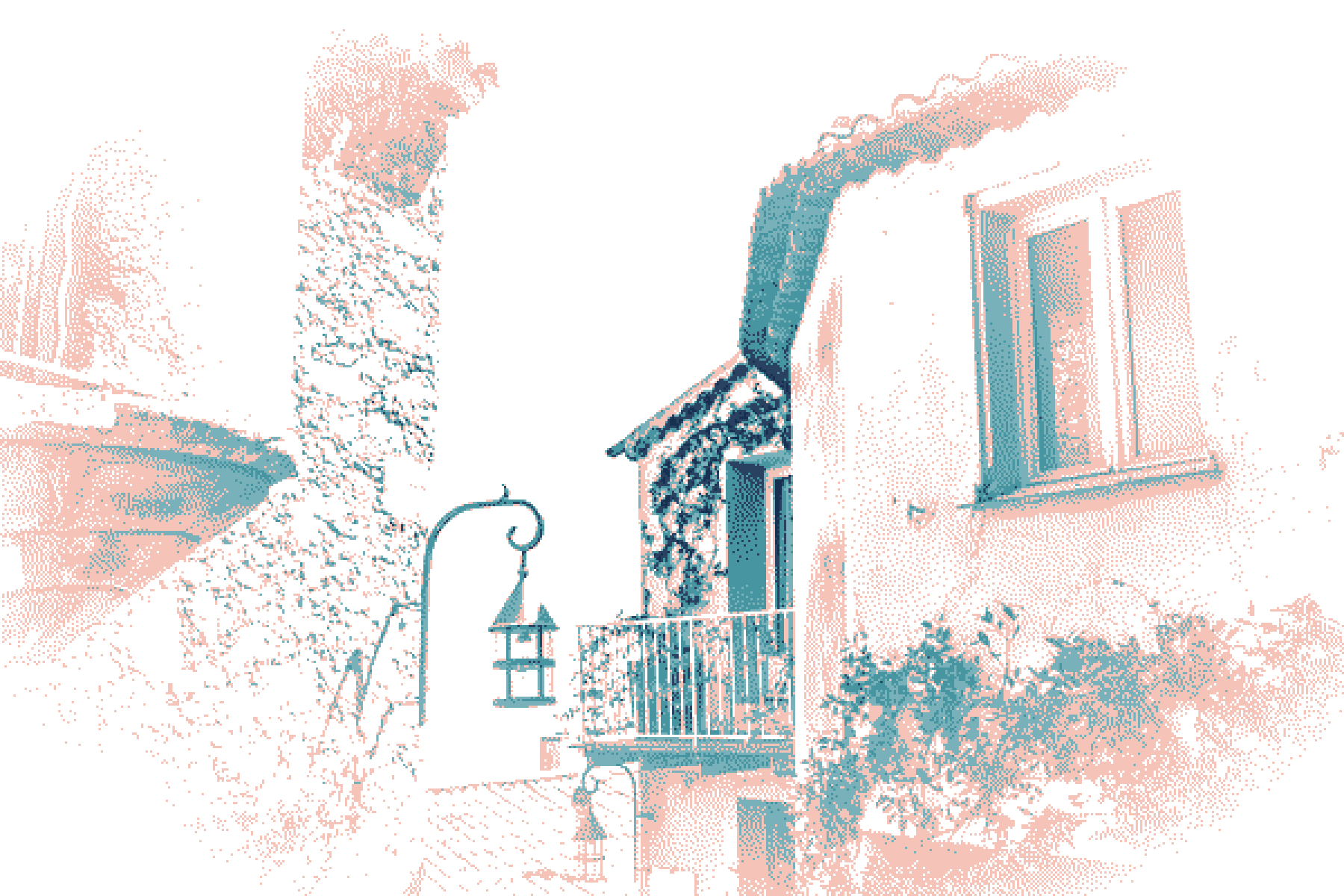
The Easement of Light and Views (Servidumbre de Luces y Vistas) in Spain in 2026: CC Articles 580-590 and What a Property Owner Can Do About Neighbour Windows
The servidumbre de luces y vistas under CC Arts 580-585 governs neighbour windows in Spain: distances, party walls, and when you can demand closure.
A neighbour’s window overlooking your garden or terrace is one of the most common property disputes on the Costa del Sol. Spanish law treats it through the servidumbre de luces y vistas, a set of rules in Articles 580 to 585 of the Codigo Civil that govern when openings toward a neighbouring property are lawful and when you can demand they be closed. The distinction between luces (light only) and vistas (views, direct or oblique), the mandatory distances, and the Supreme Court’s 2025 confirmation that no servidumbre is acquired without a formal acto obstativo are the three things every property owner needs to know.
What is the servidumbre de luces y vistas under the Codigo Civil?
The servidumbre de luces y vistas is the legal framework that controls whether and how a property owner can maintain openings in a wall that faces a neighbour’s land. Articles 580 to 585 of the Codigo Civil regulate it as one of the servidumbres legales, meaning limitations imposed by law on property ownership for the protection of neighbours. The Diccionario panhipanico del Espanol Juridico defines the servidumbre de luces as the legal prohibition of opening windows or holes in a party wall without the other co-owner’s consent, and the servidumbre de vistas as the prohibition of opening windows with direct views, balconies or similar projections over a neighbour’s property without the statutory distances.
The framework covers two distinct rights. Luces refers to openings that let in light but do not allow a view of the neighbouring property. Vistas refers to openings that allow sight of the neighbour’s land, either directly (straight ahead) or obliquely (from the side). The Codigo Civil sets different distance requirements for each, and the distinction matters because direct views are treated as more invasive of privacy than light-only holes.
When can a window be opened in a party wall?
Article 580 of the Codigo Civil states the rule in absolute terms: no co-owner (medianero) may open a window or hole in a party wall (pared medianera) without the consent of the other co-owner. This is the strictest rule in the luces y vistas framework. A party wall is one shared between two properties, and the presumption of medianeria under Article 572 means that any wall separating two properties is presumed shared unless proven otherwise.
The prohibition in Article 580 does not depend on distances, dimensions or the type of opening. Any window, hole or aperture in a party wall requires the other co-owner’s consent. If consent is given, the opening is lawful. If not, the neighbour can demand closure at any time, because the opening was never authorised. The co-owner who wants to open the window must either obtain written consent or acquire a formal servidumbre de luces y vistas by title or prescription.
Because the servidumbre in a party wall is positive (the opening is in a wall belonging to both owners), the 20-year prescription period runs from the day the holes were opened, not from an acto obstativo. The Supreme Court confirmed this distinction in STS 492/2025: when holes are in a party wall or in the neighbour’s own wall, the servidumbre is positive and the dies a quo is the day of the opening itself. When holes are in the dominante owner’s own wall, the servidumbre is negative and requires the acto obstativo.
What are the rules for windows in your own wall facing a neighbour?
Article 581 governs the narrower case of light-only openings in a non-party wall. The owner of a wall that is not shared (pared no medianera) but is adjacent to another property may open windows or holes to receive light, provided they meet specific requirements: the openings must be at the height of the ceiling beams (carreras) or immediately below the roof, they must measure no more than 30 centimetres square, and they must have an iron grating set into the wall and wire mesh.
Even with these specifications met, the neighbour retains two counter-rights. First, if the neighbour acquires the medianeria (by purchasing the wall or reaching an agreement), they can close the holes unless a contrary pact exists. Second, and more practically, the neighbour can block the openings by building on their own land or raising a wall adjacent to the one containing the holes. This is the key practical point for a buyer: light-only openings in your own wall are not a servidumbre. They are a tolerated act, and the neighbour can extinguish them at any time by constructing on their side.
How do the distance rules for views work?
Article 582 sets the two distance thresholds that govern views toward a neighbour’s property. The article prohibits opening windows with direct views (vistas rectas), balconies or similar projections (voladizos) over a neighbouring property at less than 2 metres of distance between the wall containing the opening and the neighbouring property. For oblique or side views (vistas de costado u oblicuas), the minimum is 60 centimetres.
| Opening type | Direction | Minimum distance | Measured from |
|---|---|---|---|
| Windows with direct views, balcones, voladizos | Straight (rectas) | 2 metres | Exterior wall line, or the line of the projection where there is one (Art 583) |
| Windows with oblique or side views | Oblique (oblicuas) | 60 centimetres | Property boundary line (Art 583) |
| Light-only holes in own wall | Light only (no views) | None specified | Must be 30 cm square, at ceiling height, with iron grating and wire mesh (Art 581) |
| Windows facing a public road | Any | No minimum | Public road provides the separation (Art 584) |
Article 583 specifies the measurement method. For direct views, the distance is measured from the exterior line of the wall in openings without projections, or from the line of the projection (voladizo) where one exists. For oblique views, the distance is measured from the line of separation between the two properties. This distinction matters because a balcony extends the wall line outward, meaning the 2-metre distance starts from the edge of the balcony, not the wall behind it.
The Audiencia Provincial de Zamora clarified the distinction between direct and oblique views in its SAP 244/2021 of 11 June: direct views are those the observer can see without turning their head or leaning out, while oblique or side views require the observer to lean or turn their head to the left or right. This practical test determines which distance rule applies.
When do the distance rules not apply?
Article 584 exempts buildings separated by a public road (via publica) from the distance requirements of Article 582. If two buildings face each other across a street, the road itself provides the separation the law intends, and windows with direct or oblique views may be opened regardless of the 2-metre or 60-centimetre thresholds. This is common in town-centre properties in Marbella, Estepona or Sotogrande, where buildings on opposite sides of a narrow street have windows that face each other at close range.
The exemption applies only to public roads, not to private driveways, shared access paths or communal passages within an urbanizacion. If the separation is a private way, the distance rules of Article 582 still apply.
What happens if a right to views has been acquired?
Article 585 addresses the situation where a right to direct views, balconies or miradores over a neighbouring property has been acquired by any title (por cualquier titulo). In that case, the owner of the neighbouring property (the predio sirviente) cannot build at less than 3 metres of distance from the windows, measured in the same manner as Article 583. This protects the acquired right: if you have a servidumbre de vistas, your neighbour cannot block it by constructing a wall right next to your windows.
The phrase “by any title” is broad. The Supreme Court explained in STS 492/2025, citing its own precedent STS 317/2016 of 13 May, that the jurisprudencia has admitted any legal act or business that creates the servidumbre, whether onerous or gratuitous, inter vivos or mortis causa, without requiring that it be documented in a public deed. This means a servidumbre de vistas can be established by a private agreement, by a testamentary provision, or even by acquisitive prescription if the statutory conditions are met.
How is a servidumbre de luces y vistas acquired by prescription?
The general rule is in Articles 537 and 538 of the Codigo Civil. Article 537 allows continuous and apparent servidumbres to be acquired by title or by 20 years of prescription. The servidumbre de luces y vistas is both continuous and apparent: it is ceaseless in its use (the window is always open) and visible by external signs (the window itself). The 20-year period is the ordinary prescription for real rights.
The critical distinction is in Article 538 and its jurisprudencia. The Supreme Court has consistently held that when the holes are in the dominante owner’s own wall (pared propia), the servidumbre is negative, and the prescription period does not begin on the day the holes were opened. Instead, the dies a quo is the day the dominante owner performed a formal acto obstativo: an act opposing the neighbour’s exercise of a right that would be lawful without the servidumbre. Examples include a formal requirement that the neighbour not build, or an interdicto de obra nueva to suspend construction.
The Supreme Court confirmed this doctrine in STS 492/2025, ECLI:ES:TS:2025:1353, a case from A Coruna where windows existed since before the Codigo Civil entered into force in 1889. The neighbours claimed a servidumbre acquired by 20 years of prescription, arguing the windows had been open for over a century. The Supreme Court rejected the claim, holding that the mere existence of windows in one’s own wall, without any acto obstativo, does not start the prescription clock. The court annulled the declaration of servidumbre and stated that the 20-year period cannot be computed from the opening of holes in pared propia, only from the production of an acto obstativo.
This is a significant point for property owners. A neighbour’s window that has overlooked your garden for decades does not necessarily enjoy a servidumbre. If the window is in the neighbour’s own wall and no formal objection was ever recorded, the opening is a tolerated act, not an acquired right. You retain the right to block it by building on your own land.
What can you do about non-compliant neighbour windows?
If a neighbour has opened windows toward your property without meeting the legal requirements, you have several remedies under the Codigo Civil and the procedural law.
First, if the openings are in a party wall without your consent (Article 580), you can demand their closure at any time. The opening was never authorised and the prohibition is absolute.
Second, if the openings are in the neighbour’s own wall but do not meet the distance requirements of Article 582 (less than 2 metres for direct views, less than 60 centimetres for oblique views), you can demand compliance. The interdicto de obra nueva under Article 250 of the Ley de Enjuiciamiento Civil provides a fast-track procedure to suspend unauthorised construction before it is completed. This remedy must be exercised within the statutory window, typically before the construction is finished.
Third, Article 581 gives you the right to block light-only openings in a neighbour’s non-party wall by building on your own land or raising a wall adjacent to the one containing the holes. This is a self-help remedy that does not require judicial action: you construct on your property, and the openings are physically blocked.
Fourth, if the neighbour claims a servidumbre acquired by prescription, you can challenge the claim by showing that no acto obstativo was ever performed. STS 492/2025 confirms that without an acto obstativo, the prescription period never began, and no servidumbre was acquired.
For any of these remedies, the first practical step is to have your lawyer pull the nota simple from the Property Registry to check whether a servidumbre de luces y vistas is recorded against either property. A registered servidumbre is enforceable against all subsequent owners. An unregistered one may exist if it was acquired by prescription, but the burden of proof is on the claimant.
How do luces y vistas interact with party wall rules?
The servidumbre de luces y vistas is closely connected to the rules on party walls (paredes medianeras). Article 580 prohibits openings in a party wall without consent, and the party wall framework under Articles 571 to 579 governs the co-ownership and use of shared walls. A dispute about neighbour windows often involves a prior dispute about whether the wall is medianera at all.
If the wall is medianera, Article 580 applies and no opening is lawful without consent. If the wall is entirely on one owner’s land, Article 581 applies and light-only openings are permitted subject to the dimensional requirements, but the neighbour can block them. The property boundary rules determine which case applies, and the presumption of medianeria in Article 572 places the burden on the owner claiming sole ownership of the wall.
When a neighbour’s construction work involves opening windows toward your property, the interdicto de obra nueva can suspend the entire project until the luces y vistas question is resolved. This is a powerful remedy because it halts construction before it is completed, avoiding the more difficult task of forcing the closure of finished windows.
What should a buyer check before purchasing?
Due diligence on luces y vistas involves three checks. First, the nota simple from the Property Registry will show any registered servidumbre de luces y vistas affecting the property. Second, a physical inspection should identify all openings in walls facing neighbouring properties, noting their type (direct views, oblique views, light-only), their distance from the property boundary, and whether they are in a party wall or the owner’s own wall.
Third, if the property has windows that do not meet the Article 582 distance requirements, the buyer should determine whether a servidumbre exists. If the windows are in the seller’s own wall and no servidumbre is registered, the openings are a tolerated act that the neighbour can block at any time. This affects the property’s value and the buyer’s enjoyment of it. If the windows are in a party wall without documented consent, the neighbour can demand closure.
The general servitudes guide explains how all servidumbres appear on the registry and how they survive every change of ownership. A servidumbre de luces y vistas registered against a property you are buying means you inherit the burden, and the neighbouring property’s owner retains the right to the views.
Frequently asked questions
- Can I open a window in a shared wall without my neighbour's permission in Spain?
- No. Article 580 of the Codigo Civil prohibits any medianero from opening a window or hole in a party wall without the consent of the other co-owner. The prohibition is absolute and does not depend on distances or dimensions. To open a lawful window in a party wall you need either written consent or a formally constituted servidumbre de luces y vistas acquired by title or prescription.
- What is the minimum distance for windows with views toward a neighbour's property?
- Article 582 of the Codigo Civil requires at least 2 metres between the wall containing the window and the neighbouring property for direct views, balcones or voladizos. For oblique or side views, the minimum is 60 centimetres. Article 583 specifies that direct-view distances are measured from the exterior wall line (or the line of any projection), while oblique-view distances are measured from the property boundary line itself.
- Can I acquire a right to keep my windows open by long use in Spain?
- Only if the windows are in a party wall or the neighbour's wall, making the servidumbre positive, in which case the 20-year prescription runs from the day the openings were made. If the windows are in your own wall, the servidumbre is negative and the Supreme Court held in STS 492/2025 that the 20-year period does not begin until you perform a formal acto obstativo, such as requiring the neighbour not to build or filing an interdicto de obra nueva.
- What can I do if my neighbour opens non-compliant windows toward my property?
- If no servidumbre exists, Article 581 allows you to block the openings by building on your own land or raising a wall adjacent to the one containing the holes. You can also demand closure or compliance with the 30-centimetre square requirement. The interdicto de obra nueva under LEC Article 250 provides a fast-track remedy to suspend unauthorised construction before it is completed.
- Do the distance rules apply to buildings separated by a public road?
- No. Article 584 of the Codigo Civil expressly exempts buildings separated by a public road (via publica) from the distance requirements of Article 582. A neighbour across a street may open windows with direct or oblique views regardless of the 2-metre or 60-centimetre thresholds, because the road itself provides the separation the law intends.
- If I have a right to views, can my neighbour build right next to my windows?
- No. Article 585 requires the owner of the neighbouring property (the predio sirviente) to maintain at least 3 metres of distance when building, measured in the same manner as Article 583. This protects the acquired right to light and views. The 3-metre rule applies regardless of how the right was acquired, whether by title, by prescription, or by any other legal act.
Sources and data
- Codigo Civil, Titulo VII. De las servidumbres, Seccion 5. De la servidumbre de luces y vistas (arts. 580-585, consolidated text) — BOE - Agencia Estatal Boletin Oficial del Estado
- STS 492/2025, 25 de marzo de 2025, Sala de lo Civil, Rec. 26/2020 (ECLI:ES:TS:2025:1353) - servidumbre de luces y vistas, acto obstativo y prescripcion — Poder Judicial - Tribunal Supremo
- Ley 13/2015, de 24 de junio, de reforma de la Ley Hipotecaria y del texto refundido de la Ley del Catastro Inmobiliario — BOE - Agencia Estatal Boletin Oficial del Estado