
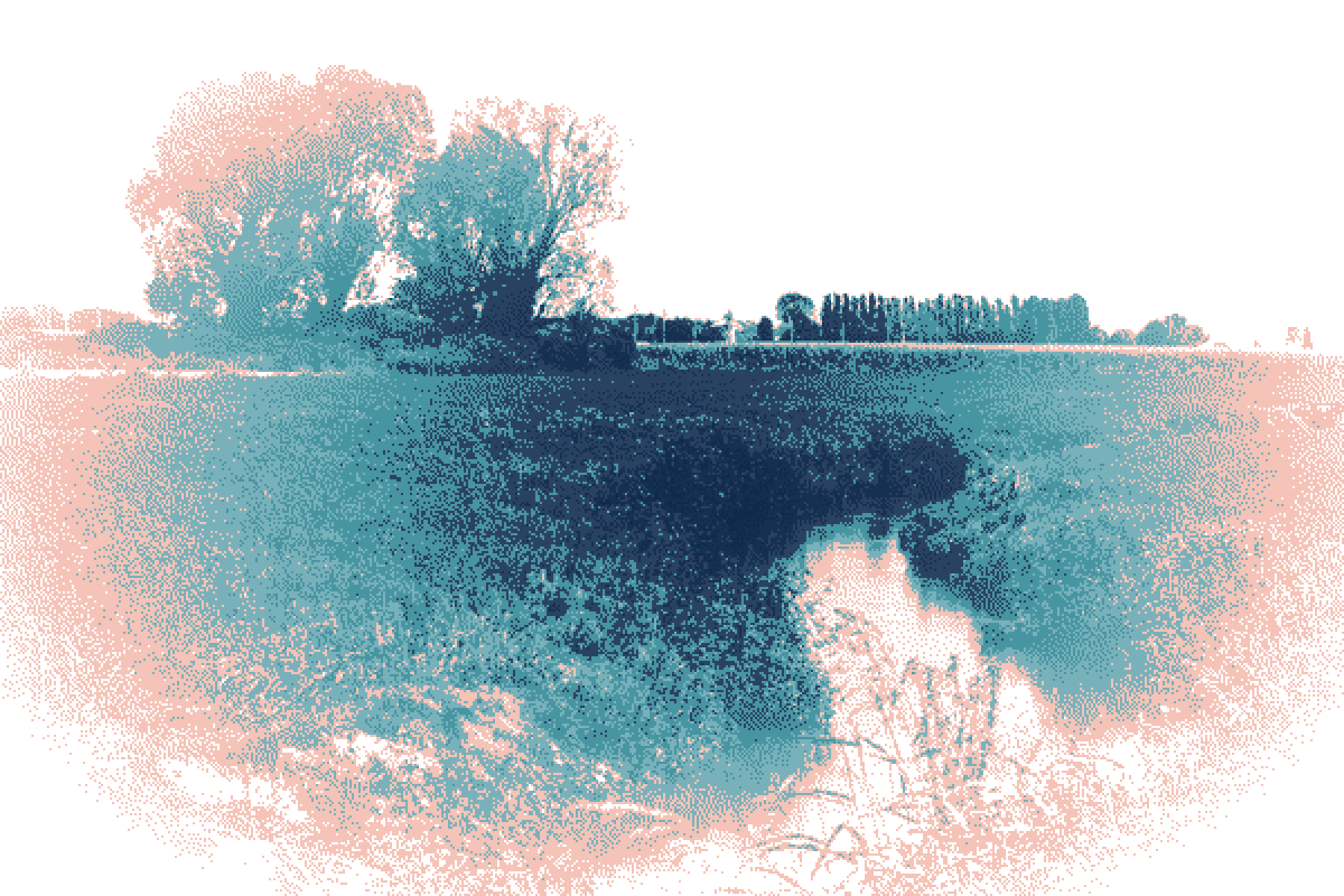
The Water Easement (Servidumbre de Aguas) in Spain in 2026: CC Articles 552-557 and Water Rights Between Neighbouring Properties
The servidumbre de aguas in Spain governs natural water flow and conduit rights under Codigo Civil Articles 552-563. How they work between neighbouring plots.
The servidumbre de aguas is the set of legal easements in the Spanish Codigo Civil that govern how water moves between neighbouring properties. Articles 552 to 563 establish the framework: lower rural plots must accept natural runoff from higher ground, owners may channel water through intermediate plots with compensation, and the Ley de Aguas supplements these rules with public-domain regulation. For anyone buying or holding rural property in Spain, particularly on the Costa del Sol where irrigation channels and seasonal watercourses criss-cross agricultural land, these easements can bind the land without appearing in the Property Registry. The property servitudes overview explains how water easements fit within the broader servidumbres framework.
What is the servidumbre natural de aguas under Article 552?
Article 552 of the Codigo Civil establishes a natural servidumbre that operates automatically by operation of law. Lower plots are subject to receiving waters that descend naturally, without human intervention, from higher plots, including the earth and stone the water carries in its course. Neither the lower owner may build works that prevent this servidumbre, nor the upper owner may build works that aggravate it. The rule is a limitation of property rather than a conventional easement: it arises from the physical relationship between the two plots and requires no constitutive act or registration.
The Supreme Court set out the requisites for the natural servidumbre in STS 202/1997 of 14 March 1997. Three conditions must concur. First, the affected plots must be situated in descending line from each other, so the lower plot is topographically below the upper. Second, the plots must be rural in nature: the court expressly excluded urban properties from the scope of Article 552. Third, the water must follow a natural course, without human intervention in its origin or flow. The court noted that channeling natural runoff does not destroy its natural character, provided the water originated from natural drainage of the upper plot rather than from artificial works. The consequence for the lower owner is absolute: they must receive the water, cannot block it, and have no claim for compensation for damage caused by the natural descent.
Article 47.1 of the consolidated Ley de Aguas, approved by Royal Decree-Law 1/2001 of 20 July, reproduces the Article 552 rule word for word. Article 47.2 adds a significant qualification: if the water is pumped (alumbramiento), comes from surplus of other water uses, or has been artificially altered in its natural quality, the lower owner may refuse to receive it and claim damages, unless a corresponding servidumbre has been established. This distinction between natural and artificial water is the key to understanding when the lower owner has rights of refusal.
What other water servidumbres does the Codigo Civil regulate?
Beyond the natural servidumbre, Articles 553 to 563 govern several specific water easements, each addressing a different practical situation:
| Article | Easement | Key rule |
|---|---|---|
| 552 | Natural servidumbre | Lower rural plots receive natural runoff; no works may block or aggravate |
| 553 | Public use of riverbanks | Banks subject to public use for navigation, fishing, salvage; 3-metre zone |
| 554 | Estribo de presa (dam abutment) | Right to support a dam on a neighbour’s bank or land, with indemnification |
| 555-556 | Saca de agua y abrevadero (water drawing and watering hole) | For public utility only, for towns or hamlets, with indemnification and right of passage for people and livestock |
| 557-561 | Acueducto (conduit) | Right to channel water through intermediate plots, with conditions and exclusions |
| 562 | Parada o partidor (dam and divider) | Right to construct irrigation intake structures in the channel, with compensation |
| 563 | Supletoriedad | Water easements governed by the Ley de Aguas where the Civil Code does not provide |
Article 553 addresses the public-use servidumbre along riverbanks. Even when banks are privately owned, they are subject in their full extension, and their margins in a three-metre zone, to public use for navigation, floating, fishing and rescue. Plots contiguous to navigable or floatable rivers are additionally subject to the camino de sirga (towing path) servidumbre for the exclusive service of navigation. If occupation of private land is necessary, the corresponding indemnification applies.
Article 554 creates the servidumbre de estribo de presa: when someone needs to divert water from a river or stream and must build a dam, and they do not own the banks or land where the dam must be supported, they may establish this easement with prior indemnification. This easement is critical for rural properties crossed by or adjacent to watercourses.
Articles 555 and 556 govern the servidumbres de saca de agua and abrevadero. These may only be imposed for public utility, in favour of a town or hamlet (poblacion o caserio), with prior indemnification. Article 556 adds that these easements carry the obligation on the servient plots to allow passage of people and livestock to the point where the water is to be used, with indemnification extended to this access.
How does the servidumbre de acueducto work under Articles 557-561?
The servidumbre de acueducto is the most practically important water easement for rural property owners. Article 557 grants any owner who wishes to use water they can dispose of for their own finca the right to make it pass through intermediate plots, with the obligation to indemnify the owners of those plots, as well as the owners of lower plots on which the water filters or falls.
Article 558 sets three conditions that the claimant must meet. First, they must prove they can dispose of the water and that it is sufficient for the use to which they intend to put it. Second, they must demonstrate that the passage they request is the most convenient and least burdensome for third parties. Third, they must indemnify the owner of the servient plot in the manner determined by laws and regulations. These conditions ensure the easement is not a blanket right but a regulated claim that balances the dominant owner’s need against the servient owner’s burden.
Article 559 imposes a critical exclusion: the servidumbre de acueducto cannot be imposed for purely private interest over existing buildings, their courtyards or dependences, or over existing gardens or orchards. This protects built and cultivated urban land from forced conduit easements. A rural finca with no buildings or formal gardens can be subject to the easement, but a house with its patio or a maintained garden cannot.
Article 560 preserves the servient owner’s residual rights: the easement does not prevent them from closing and fencing their plot, or building over the conduit, provided the conduit suffers no damage and the necessary repairs and cleaning remain possible. Article 561 classifies the servidumbre de acueducto as continuous and apparent for legal purposes, even when the passage of water is not constant or its use depends on the needs of the dominant plot or a rota established by days or hours. This classification matters because continuous and apparent servidumbres can be acquired by prescription under Article 537, while non-apparent or discontinuous ones cannot.
How does the Ley de Aguas supplement the Codigo Civil?
Article 563 of the Codigo Civil directs that the establishment, extension, form and conditions of the water servidumbres discussed in that section are governed by the special law on the matter where the Civil Code does not provide. That special law is the consolidated Ley de Aguas, approved by Royal Decree-Law 1/2001 of 20 July, whose consolidated text was last updated on 28 December 2023.
The Ley de Aguas operates on a different axis from the Civil Code. While the Civil Code governs private-law relationships between neighbouring plot owners, the Ley de Aguas regulates the public domain of waters. Article 2 defines the dominio publico hidraulico of the State to include continental surface and underground waters, the beds of natural watercourses (cauces), the beds of lakes and reservoirs, aquifers, and desalinated water. Article 4 defines the cauce as the terrain covered by water during maximum ordinary floods. Article 6 defines riberas as the lateral strips of public watercourses above the low-water level, and margenes as the lands bordering the watercourses.
A key provision for property owners is Article 6.1 of the Ley de Aguas, which establishes a five-metre servidumbre zone along the margins of public watercourses for public use, regulated by the Reglamento del Dominio Publico Hidraulico. This is distinct from the Civil Code’s three-metre zone under Article 553, which applies to the public-use servidumbre for navigation and fishing. The five-metre zone under the Ley de Aguas is broader and applies to all public watercourses, not just navigable ones. Building restrictions and public access rights apply within this zone, and a buyer of riverside rural land should verify whether the property falls within the dominio publico hidraulico or its servidumbre zones.
The Ley de Aguas also addresses water ownership. Article 5 distinguishes between public-domain cauces (those through which water flows, even discontinuously, crossing only private plots from their origin) and public watercourses. Private cauces are those through which rainwater occasionally flows, crossing only private plots from their origin, but even private cauce owners cannot build works that alter the natural course or quality of water to the detriment of public interest or third parties. The guide to buying a plot of land on the Costa del Sol covers how water rights interact with building permits and land classification.
What is the difference between natural runoff and artificial water?
The distinction between natural and artificial water is the single most important practical question for a property owner facing a water easement dispute. Article 552 of the Codigo Civil and Article 47.1 of the Ley de Aguas both require that the water descend naturally and without human intervention. STS 202/1997 of 14 March 1997 confirmed that channeling natural runoff does not destroy its natural character, provided the water originated from natural drainage of the upper plot. But water that originates from a pump, from surplus drainage of other irrigation systems, or from any artificial alteration of its natural quality falls outside the Article 552 servidumbre.
Article 47.2 of the Ley de Aguas codifies this distinction. If the water is the product of pumping (alumbramiento), is surplus from other water uses (sobrantes de otros aprovechamientos), or has been artificially altered in its spontaneous quality, the lower owner may oppose its reception and claim damages, unless a corresponding voluntary servidumbre has been established. This means the lower owner has a right of refusal for artificial water that does not exist for natural runoff.
For a rural property owner, this distinction has direct financial consequences. If a neighbour installs drainage pipes that redirect natural hillside runoff through a channel and onto your land, that is still natural water and you must accept it. But if a neighbour pumps water from a well or cistern and discharges it onto your land, you can refuse it and claim damages. The burden of proof falls on the owner claiming the servidumbre to show the water is natural, and the surveyor’s evidence of the watercourse’s origin is often decisive.
Does the servidumbre de aguas apply to urban properties?
The natural servidumbre under Article 552 applies only to rural plots. STS 202/1997 of 14 March 1997 held expressly that urban properties fall outside its scope, requiring that the affected plots be rural in nature (naturaleza rustica). This means an apartment building or an urban house cannot be forced to accept natural runoff from a neighbour’s property under Article 552.
Urban water drainage is governed instead by Articles 586 to 588 of the Codigo Civil, which address the servidumbre de desague de los edificios. Article 586 requires every building owner to construct their roofs or covers so that rainwater falls onto their own soil or onto a public street, not onto a neighbour’s soil. Even when the water falls on the owner’s own soil, they must collect it in a way that does not cause damage to the adjacent plot. This is framed as a prohibition rather than a servidumbre: the owner cannot direct roof water onto a neighbour, regardless of whether damage results.
Article 587 addresses the servidumbre de vertiente de tejados: the owner of the plot suffering the roof-water servidumbre may build, receiving the water onto their own roof or giving it another exit in accordance with local ordinances and customs, so long as no burden or damage results to the dominant plot. Article 588 deals with enclosed patios or corrals, allowing drainage through the servient plot where no other exit is available, subject to local ordinances.
The servidumbre de acueducto under Article 559 also excludes urban land: it cannot be imposed over existing buildings, their courtyards or dependences, or over existing gardens or orchards for purely private interest. The guide to neighbour construction damage covers what to do when a neighbour’s building works redirect water onto your property, which may involve both the Article 586 drainage rules and the general liability provisions.
What should a buyer check before purchasing rural property with water rights?
A buyer of rural Costa del Sol property should investigate water easements before completing the purchase, because these easements can bind the land without appearing in the Property Registry. The natural servidumbre of Article 552 arises from the topography of the land and operates by operation of law, not by registered title. A nota simple from the Property Registry may show no water easement, yet the land may be subject to natural runoff from a higher neighbour or to an acueducto crossing the plot.
The practical due-diligence checklist for a rural finca includes several steps. First, order a nota simple to check for any registered water easements or conduit rights. Second, inspect the land physically with a surveyor (perito) to identify natural watercourses, seasonal streams, acequias (irrigation channels), drainage signs, and any pipes or channels crossing the boundary. Third, check whether any part of the property falls within the dominio publico hidraulico or its five-metre servidumbre zone under Article 6 of the Ley de Aguas, which the Confederacion Hidrografica del Sur (the relevant river basin authority for the Costa del Sol) can confirm. Fourth, ask the seller about any known water disputes with neighbours, particularly regarding natural runoff or irrigation rights. The guide to Spanish land classification explains how suelo rustico status affects water rights and building permissions.
If the property has irrigation water rights, verify the source and the concession. Water from a public watercourse requires a concession from the river basin authority under the Ley de Aguas, and the concession terms may impose conditions on the land. Water from a private well on the property is subject to the regime of private waters under Articles 33 to 40 of the Codigo Civil and the subterranean waters provisions of the Ley de Aguas. The guide to property boundary disputes covers the deslinde procedure, which often surfaces watercourse boundary questions before the easement analysis begins.
How are water easement disputes resolved in Spain?
Water easement disputes typically reach court through one of three routes. The first is an action for declaration of servidumbre, where the dominant owner asks the court to confirm the existence of a natural or legal water easement and order the servient owner to cease obstructive works. The second is a negatoria action (accion negatoria), where the servient owner asks the court to declare that no easement exists and order the dominant owner to cease interference. The third is an interdicto, a summary possession-protection proceeding under Article 250 of the Ley de Enjuiciamiento Civil, available when someone has been disturbed in their possession of a watercourse or conduit. The guide to the interdicts explains when a summary interdicto is the appropriate route versus a full declaration action.
The burden of proof differs by easement type. For the natural servidumbre, the claimant must prove the three STS 202/1997 requisites: descending topography, rural nature of both plots, and natural origin of the water. For the servidumbre de acueducto, the claimant must prove the Article 558 conditions: water availability, the most convenient and least burdensome route, and tender of indemnification. For a prescriptive acueducto under Article 561 (continuous and apparent), the claimant must prove 20 years of continuous, visible, unchallenged use under Article 537.
Expert surveyor evidence is central to water easement litigation. A perito agronomo or perito topografo will typically inspect both plots, map the watercourse, determine whether the flow is natural or artificial, assess the most convenient route for an acueducto, and quantify any damage. The court may also visit the site (vista al lugar) in contested cases. STS 414/2008 of 19 May 2008 confirmed that the Article 552 natural servidumbre is a legal servidumbre but nothing prevents its constitution as a voluntary servidumbre, which affects how the parties frame their evidence.
Frequently asked questions
- What is the servidumbre de aguas in Spanish law?
- The servidumbre de aguas is a category of legal easement in the Spanish Codigo Civil, Articles 552 to 563, that governs how water flows between neighbouring properties. It includes the natural servidumbre (lower plots must receive natural runoff from higher plots), the servidumbre de acueducto (the right to channel water through a neighbour's land), and easements for dams, water extraction and livestock watering. These easements arise by operation of law or by voluntary agreement, and they bind the servient land regardless of changes in ownership.
- Can I stop water flowing onto my property from my neighbour's land?
- Only if the water is not natural. Article 552 of the Codigo Civil requires lower rural plots to receive water that descends naturally from higher plots without human intervention. You cannot build works to block this natural flow, and the upper owner cannot build works that aggravate it. However, Article 47.2 of the Ley de Aguas adds that if the water is pumped, comes from drainage of other uses, or has been artificially altered in quality, you may refuse it and claim damages. Natural runoff must be accepted without compensation.
- Can I run a pipe through my neighbour's land to irrigate my property?
- Yes, under Article 557 of the Codigo Civil, any owner who can dispose of water for their own finca has the right to run it through intermediate plots, with an obligation to indemnify their owners. Article 558 requires you to prove the water is sufficient for its intended use, demonstrate the route is the most convenient and least burdensome for third parties, and pay compensation determined by law and regulations. Article 559 prohibits the easement over existing buildings, courtyards, gardens or orchards for purely private interest.
- Does the servidumbre de aguas apply to urban properties?
- The natural servidumbre under Article 552 applies only to rural plots, as confirmed by the Supreme Court in STS 202/1997 of 14 March 1997, which held that urban properties fall outside its scope. Urban water drainage is governed instead by Articles 586 to 588 of the Codigo Civil, which require building owners to direct roof water onto their own soil or public streets, not onto a neighbour's land. The servidumbre de acueducto under Article 559 cannot be imposed over existing buildings or their dependences for private interest.
- How does the Ley de Aguas interact with the Codigo Civil on water easements?
- Article 563 of the Codigo Civil states that the establishment, extension, form and conditions of water servidumbres are governed by the special law on the matter where the Civil Code does not provide. The consolidated Ley de Aguas, approved by Royal Decree-Law 1/2001 of 20 July, is that special law. Its Article 47 reproduces the Article 552 natural servidumbre rule and adds a second paragraph allowing the lower owner to refuse artificially pumped or quality-altered water. The Ley de Aguas also regulates public water domain, concessions and the five-metre servidumbre zone along riverbanks.
- Should a property buyer check for water easements before purchasing?
- Yes. Water easements may exist by operation of law without being recorded in the Property Registry, particularly the natural servidumbre of Article 552 which arises automatically from the topography of the land. A nota simple may not reveal unrecorded water rights. A surveyor should inspect for natural watercourses, acequias (irrigation channels), drainage signs and any physical evidence of conduit pipes crossing the land. For rural fincas on the Costa del Sol, water easements are among the most common sources of neighbour disputes after boundary questions.
Sources and data
- Codigo Civil, Seccion Segunda. De las servidumbres en materia de aguas (arts. 552-563, consolidated text) — BOE - Agencia Estatal Boletin Oficial del Estado
- Real Decreto Legislativo 1/2001, de 20 de julio, por el que se aprueba el texto refundido de la Ley de Aguas (BOE-A-2001-14276) — BOE - Agencia Estatal Boletin Oficial del Estado
- STS 202/1997, 14 de marzo de 1997, Sala de lo Civil, Rec. (servidumbre natural de aguas, requisitos) — Poder Judicial - Tribunal Supremo
- STS 414/2008, 19 de mayo de 2008, Sala de lo Civil, Rec. 1226/2002 (servidumbre natural de aguas como servidumbre legal) — Poder Judicial - Tribunal Supremo
- Codigo Civil, Seccion Tercera. De la servidumbre de desague de los edificios (arts. 586-588, consolidated text) — BOE - Agencia Estatal Boletin Oficial del Estado