
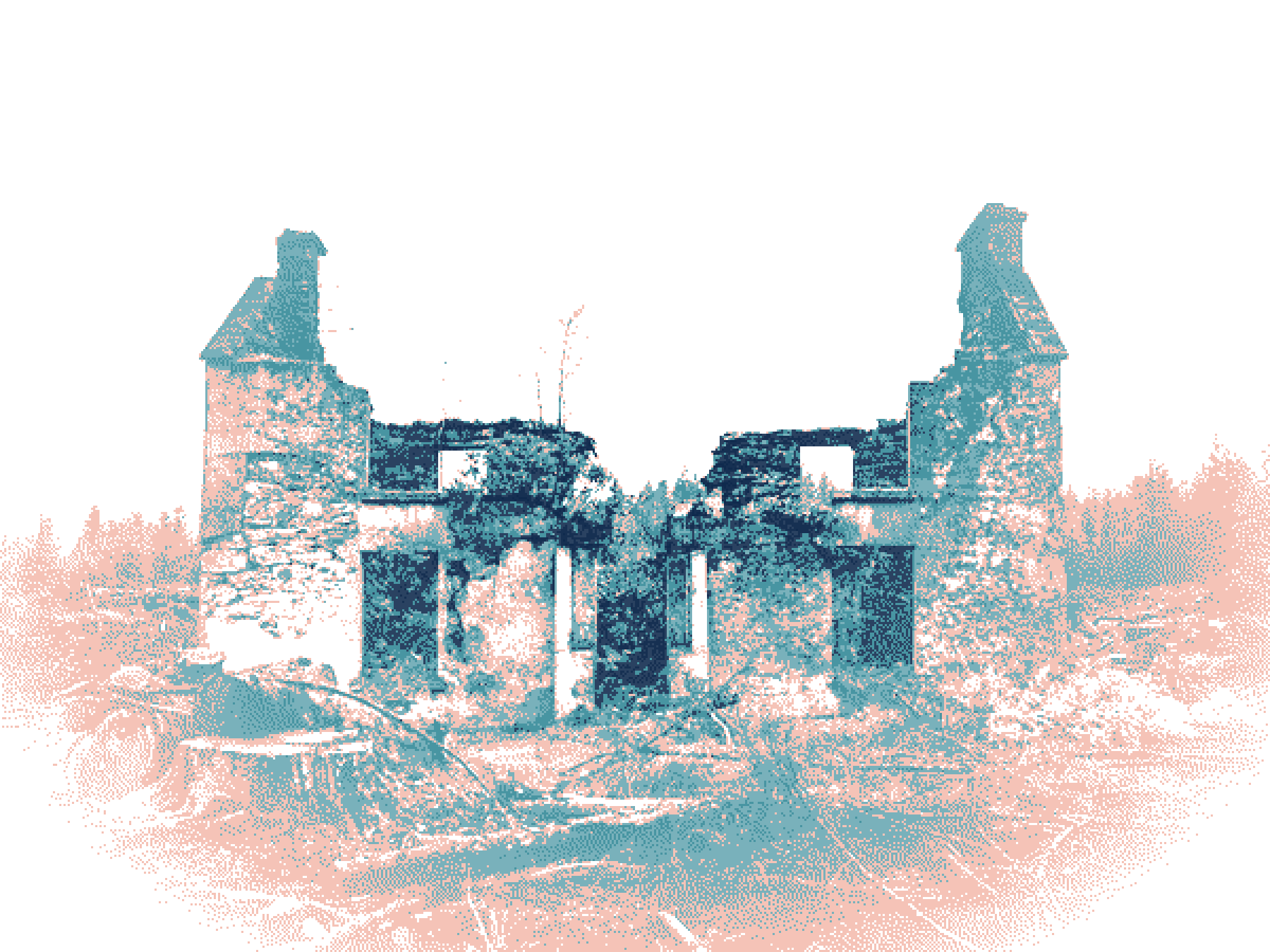
Property ruin declaration in Spain in 2026: when a building is declared uninhabitable and what the owner must do
A declaracion de ruina in Spain classifies a building as uninhabitable. Here is the 2026 procedure under the LOUA and Codigo Civil, and what owners must do.
A property ruin declaration in Spain, or declaracion de ruina, is a municipal administrative procedure that formally classifies a building as uninhabitable when its state of deterioration makes repair or demolition necessary. The town hall initiates the process under the conservation duties established by the Ley del Suelo (RDLeg 7/2015) and, in Andalusia, the more specific framework of the Ley de Ordenacion Urbanistica de Andalucía (LOUA, Ley 7/2002), alongside the preventive provisions of the Codigo Civil. For a property owner on the Costa del Sol, a ruin declaration means the building cannot legally be inhabited, let or sold without disclosure, the leases on it are extinguished, and the owner faces a deadline to secure, repair or demolish. For a buyer, discovering a pending ruin declaration in town hall records is a due-diligence red flag that may make the property unmortgageable and uninsurable. Here is how the procedure works, what the categories of ruin mean in 2026, and what an owner must do.
What is a declaracion de ruina?
A declaracion de ruina is the administrative instrument that ends a building’s useful life when technical, economic or urbanistic circumstances justify demolition or intensive rehabilitation. The procedure is rooted in three legal frameworks that work together: the Codigo Civil governs the owner’s civil duty of conservation and liability for damage, the Ley del Suelo y Rehabilitacion Urbana (RDLeg 7/2015) gives municipalities the urbanistic enforcement powers to act when an owner fails that duty, and in Andalusia the LOUA (Ley 7/2002) sets out the specific supuestos and the two-track procedure that Costa del Sol town halls actually apply.
Article 15 of RDLeg 7/2015 imposes on every property owner the duty to conserve the building in accordance with municipal standards, and its Article 16 sets the rehabilitation duties that follow. When a building falls into a state of ruin or poses a danger to public safety, the municipality can initiate a ruin declaration procedure. The process typically begins with a technical inspection by the town hall’s arquitecto municipal, who produces an informe tecnico assessing the building’s structural condition. If the report confirms the building is uninhabitable, the owner is formally notified and given the opportunity to respond before the municipality issues a resolution declaring the ruin.
The Codigo Civil sets the preventive obligation in Article 389: if a building, wall, column or any other construction threatens ruin, the owner is obliged to demolish it or execute the works necessary to prevent its collapse. If the owner fails to act, the authority may demolish at the owner’s expense. This provision operates independently of the municipal administrative procedure, meaning a neighbour or the town hall itself can trigger the demolition duty through the courts even before a formal ruin declaration is issued. Article 391 ties the civil and liability threads together: if the threatened building or tree actually falls, the matter is governed by Articles 1907 and 1908 on damage liability. If you own property in Spain, the due diligence checklist for buying Spanish property includes checking for pending declarations at the town hall.
What does the LOUA add for Andalusian property?
The LOUA (Ley 7/2002, BOE-A-2003-811) is the Andalusian statute that a Costa del Sol owner will actually face, because urbanistic enforcement is a competence the Spanish framework leaves largely to the autonomous communities. The LOUA splits the ruin regime into two distinct procedures, and understanding which one applies is the first practical question.
Situacion legal de ruina urbanistica (LOUA Art 157) is the ordinary declared state. Article 157 lists four supuestos in which the town hall may declare it: (a) when the cost of the repairs needed to restore stability, security, waterproofing and structural consolidation exceeds the limit of the normal conservation duty defined in Article 155.3; (b) when the building requires permanent or indefinite rehabilitation works that are incompatible with a reasonable use of the property; (c) when the building, despite maintenance, presents a manifest state of deterioration that makes it uninhabitable; and (d) when there is a constant and progressive trend over time of increasing investment needed for conservation. The declaration places the building in the Registro Municipal de Solares y Edificaciones Ruinosas (Art 157.5), which is the public record a buyer’s lawyer should search.
Ruina fisica inminente (LOUA Art 159) is the emergency track. When a construction threatens to collapse imminently, endangering public safety or protected heritage, the town hall can adopt urgent measures (shoring, partial demolition, eviction) without waiting for the full ordinary procedure. The LOUA does not treat this emergency power as a licence for total demolition: the measures must be justified by the immediate risk and proportionate to it. The ordinary ruin declaration and the inminente procedure are not mutually exclusive, and a single building can move from one to the other if its condition worsens.
What is the difference between ruin total and ruin parcial?
The distinction between ruin total and ruin parcial is the single most practically important classification in the procedure, because it determines whether the owner has a repair option or faces mandatory demolition.
Ruin total means the building’s deterioration is irrecoverable. The structural damage is so advanced that repair is technically impossible or economically disproportionate, and the only legally permitted outcome is demolition. There is no rehabilitation option. The municipality orders the owner to demolish within a set deadline, and if the owner fails to act, the town hall executes the demolition subsidiarily and recovers the cost through a charge on the property or, ultimately, an auction.
Ruin parcial means the building has serious defects but they are repairable. The municipality declares the ruin but gives the owner a deadline to carry out the rehabilitation works necessary to restore the building to a safe and habitable condition. If the owner completes the works within the deadline, the ruin declaration is lifted. If the owner misses the deadline, the partial ruin can escalate to total ruin, converting the repair obligation into a demolition order.
| Category | Meaning | Owner’s obligation | Failure consequence |
|---|---|---|---|
| Ruin total | Irrecoverable structural deterioration | Mandatory demolition within deadline | Town hall demolishes at owner’s cost |
| Ruin parcial | Serious but repairable defects | Rehabilitation works within deadline | Escalation to ruin total and demolition |
| Ruina fisica inminente | Immediate collapse danger (LOUA Art 159) | Urgent shoring, partial demolition or eviction | Town hall adopts urgent measures directly |
The classification depends on the technical report. A building with severe aluminosis in its structural beams, where the concrete has lost its load-bearing capacity, is likely to be classified as ruin total. A building with a crumbling facade and roof leaks but sound structure may be classified as ruin parcial, giving the owner a window to repair.
What does the Codigo Civil say about ruin and owner liability?
The Codigo Civil contains the provisions that govern the owner’s civil liability when a building threatens or suffers ruin, and they sit underneath the municipal procedure as the private-law backstop.
Article 389 establishes the preventive duty: if a building threatens ruin, the owner must demolish or execute preventive works. This is not a discretionary obligation. The owner cannot wait for the building to collapse. The provision gives the authority the power to act in the owner’s place and recover the cost, which is the mechanism the town hall uses for subsidiary execution under the Ley del Suelo and the LOUA.
Article 1907 establishes the liability for damage: the owner of a building is responsible for damages resulting from the ruin of all or part of it, if the ruin occurs for lack of the necessary repairs. This is a quasi-objective responsibility, meaning the owner’s negligence is presumed from the fact of the ruin itself. The building’s age is not a valid defence, because the duty of conservation runs for as long as the owner holds the property. The property insurance guide for non-resident owners explains what standard policies cover, but a ruin caused by lack of maintenance is typically excluded.
Article 1908 extends the same strict responsibility to other dangerous conditions on the property (explosions, excessive smoke, falling trees in transit areas, noxious emissions). Article 1909 closes the loop: if the damage dealt with by Articles 1907 and 1908 results from a construction defect, the third party who suffers it may claim against the architect or, where applicable, the constructor, within the legal time limit. Article 391 is the bridge that points the falling-building scenario to Articles 1907 and 1908, so the civil and administrative tracks converge on the same liability core.
How does the LOE (Ley 38/1999) interact with the ruin declaration?
The Ley de Ordenacion de la Edificacion establishes the liability framework for construction defects that can lead to ruin. Article 16 of the LOE imposes on every owner the obligation to conserve the building through adequate use and maintenance, and to receive, conserve and transmit the documentation of the executed works and the insurance and guarantees that exist.
Article 17 sets the liability periods for construction agents:
| Defect type | Liability period | Responsible agents |
|---|---|---|
| Structural defects (foundation, supports, beams, slabs, load-bearing walls) | 10 years | All agents involved in the building process |
| Habitability defects (construction elements or installations affecting habitability) | 3 years | All agents involved in the building process |
| Finishing defects (execution defects affecting completion or finish elements) | 1 year | The builder |
These periods run from the date of the acta de recepcion, the formal handover of the completed works. If a building suffers structural collapse within ten years of completion due to a construction defect, the owner can pursue the builder, the developer and the project directors under the LOE rather than bearing the cost personally. The seguro decenal guide explains the ten-year structural warranty that the developer must subscribe for residential buildings.
Article 18 of the LOE sets a two-year prescription period for actions to demand liability for material damage from construction defects, counted from when the damage occurs. This is distinct from the one-year prescription in Article 1968 of the Codigo Civil for extracontractual liability claims arising from ruin caused by lack of maintenance. The two frameworks apply to different situations: the LOE covers defects originating from the construction process, while the Codigo Civil covers the owner’s ongoing duty to maintain.
What is the municipal procedure for a ruin declaration?
The municipal ruin declaration procedure in Andalusia follows a structured administrative process under the LOUA and the common administrative law (Ley 39/2015):
- Technical inspection. The town hall’s technical services inspect the building, usually after a complaint from a neighbour, a municipal inspection, an ITE report, or a communication from the emergency services. The arquitecto municipal produces an informe tecnico assessing the building’s condition.
- Owner notification. The owner is formally notified of the inspection findings and given a hearing (audiencia) to present arguments, evidence or counter-technical reports within a set period, typically 15 days.
- Provisional measures. If the building poses an imminent danger to public safety, the municipality may order emergency securing works, eviction of occupants, or immediate demolition of the most dangerous elements under the ruina fisica inminente procedure (LOUA Art 159) without waiting for the full ordinary procedure.
- Resolution. The municipality issues a formal resolution declaring the ruin (total or parcial) and setting the owner’s obligations and deadlines. For ruin parcial, the resolution specifies the required rehabilitation works and the deadline. For ruin total, it orders demolition.
- Registration and effects. The declared building is entered in the Registro Municipal de Solares y Edificaciones Ruinosas (LOUA Art 157.5). The declaration extinguishes any lease contracts on the property and requires the eviction of occupants, because the building can no longer be legally inhabited.
- Execution. If the owner complies within the deadline, the procedure closes. If the owner fails to act, the municipality executes the works or demolition subsidiarily and recovers the cost through a charge on the property (apremio) or, ultimately, a public auction of the land.
The RDLeg 7/2015 framework gives municipalities broad enforcement powers. Article 49 allows the town hall to order the forced sale of a property whose owner persistently fails conservation duties, substituting the owner with a buyer who will comply. This is an extreme measure but it is available in the statutory toolkit.
How does the 2026 ITE framework surface ruin conditions?
The most common route into a ruin procedure in 2026 is the Inspeccion Tecnica de Edificios (ITE), the periodic technical inspection that Andalusia requires for residential buildings once they pass 50 years of age. The ITE is the early-warning instrument: an architect or arquitecto tecnico inspects the structure, facade, services and habitability, and produces a report that the town hall reviews. When the ITE report flags structural failure or a state of manifest deterioration, the municipality can open a ruin file on the back of it.
For a Costa del Sol owner this matters because the coastal building stock includes a large cohort of 1970s and 1980s apartment blocks that are now crossing the 50-year threshold and entering the ITE cohort. A building that passes its ITE with minor defects is simply directed to repair works under a rehabilitation permit. A building that fails its ITE on structural grounds is the one that moves into the ruin declaration track. The property survey guide explains how a surveyor assesses structural condition, which is the first step if the owner suspects a building may be at risk before the ITE falls due.
How does a ruin declaration differ from a rehabilitation permit or an AFO?
A ruin declaration is one of three administrative states an older or non-conforming building can be placed in, and buyers and owners routinely confuse them. The comparison matters because the obligations, the works allowed and the property’s marketability are completely different in each case.
| State | What it means | Works allowed | Marketability |
|---|---|---|---|
| Declaracion de ruina | The building’s useful life has ended; demolition or intensive rehabilitation is mandatory | Demolition, or rehabilitation to the standard set in the resolution | Uninhabitable, leases extinguished, likely unmortgageable; obligation transfers to buyer |
| Licencia de obra mayor (rehabilitation permit) | The building is viable but needs structural works; the owner applies for the permit | Structural reform, facade, roof, installations | Building remains habitable or is returned to habitability; mortgageable on completion |
| Asimilado a fuera de ordenacion (AFO) | An irregular building that cannot be legalised but is not ruinous; recognised under the Junta de Andalucía Decree-Ley on irregular edifications | Conservation and safety works only, plus basic services connection | Not legalised; services can be connected; can access the Registro de la Propiedad but is not a legal building |
The AFO (asimilado a fuera de ordenacion) is the Junta de Andalucía’s formal category for buildings that were constructed without the required licences or in breach of their conditions, and on which the time limit for restoring legal order has expired. The Junta is explicit that recognising AFO status does not legalise the building: it allows basic service connections (water, sanitation, electricity) and conservation works to guarantee safety and habitability, and it opens a route to the Registro de la Propiedad, but the building remains irregular. A ruin declaration, by contrast, is a statement that the building’s physical life is over. A rehabilitation permit is the instrument for a building that is staying. The refurbishment permits guide covers the licence framework for works on existing buildings, and the illegal builds and land checks guide for the Costa del Sol covers the AFO and irregular-build landscape.
Can a buyer discover a ruin declaration during due diligence?
Yes, and doing so is essential. A pending or active ruin declaration is a material fact that affects the property’s value, habitability, insurability and mortgageability. A buyer’s lawyer should check:
- Town hall records. The arquitectura municipal or disciplina urbanistica department holds records of any pending or resolved ruin declarations, and the Registro Municipal de Solares y Edificaciones Ruinosas (LOUA Art 157.5) lists buildings already declared. A solicitude de informacion urbanistica will reveal whether a ruin procedure has been initiated.
- The nota simple from the Registro de la Propiedad. While the Land Registry does not record ruin declarations directly, it may show embargoes or charges resulting from the town hall’s cost recovery actions. The Spanish property deeds registry guide explains how to obtain and read a nota simple.
- The cedula de habitabilidad. A building declared in ruin will have had its habitability certificate revoked or refused. The habitability certificate guide explains the certificate framework.
A buyer who discovers a ruin declaration should treat it as a potential deal-breaker. The obligation to demolish or repair transfers with ownership, meaning the new owner inherits the cost and the deadline. A property with a ruin total declaration cannot legally be inhabited, is unlikely to be mortgageable, and may face forced sale by the municipality.
How does a property owner appeal a ruin declaration?
A ruin declaration is an administrative act and can be challenged through the administrative and judicial appeal cascade:
- Recurso de reposicion. Filed with the same town hall body that issued the declaration, within one month of notification (Ley 39/2015, Article 123). The owner can present a counter-technical report arguing the building is not in ruin or the classification should be parcial rather than total.
- Recurso de alzada. If the reposicion is rejected, filed with the superior administrative body within one month. In many cases this is optional, as the owner can skip directly to the judicial route.
- Contencioso-administrativo appeal. Filed with the contentious-administrative court within two months of the final administrative resolution (Ley 29/1998, Article 46). The court reviews the legality of the declaration, the adequacy of the technical report, and the proportionality of the ordered measures.
An appeal does not automatically suspend the demolition or rehabilitation order unless the body or court grants a suspension. The owner may need to request a cautelar suspension separately, which may require posting a bond.
What should a non-resident owner do?
A non-resident owner who receives a ruin declaration notification should act immediately, not wait. The practical steps are:
- Engage a local arquitecto to produce an independent technical report, especially if the owner believes the classification should be parcial rather than total.
- Appoint a Spanish lawyer to file the recurso de reposicion within the one-month deadline, or to negotiate a rehabilitation plan with the municipality if the owner accepts the declaration.
- If the owner accepts the ruin parcial classification, commission the rehabilitation works through a licensed contractor and a proyecto de rehabilitacion signed by an architect, ensuring completion within the municipal deadline.
- If the property is declared ruin total and the owner accepts the demolition, obtain a demolition licence and engage a contractor. The refurbishment permits guide covers the licence framework for works on existing buildings.
A non-resident owner who ignores the declaration risks subsidiary execution by the town hall, which can proceed without the owner’s presence and recover costs through a property charge or auction.
Frequently asked questions
- What is the difference between ruin total and ruin parcial?
- Ruin total means the building's structural deterioration is irrecoverable and demolition is mandatory, with no repair option available. Ruin parcial means the defects are repairable and the owner is given a deadline to carry out the rehabilitation works. If the owner misses the deadline, the partial ruin can escalate to total ruin with a demolition order.
- What is the difference between situacion legal de ruina urbanistica and ruina fisica inminente in Andalusia?
- Situacion legal de ruina urbanistica (LOUA Art 157) is a declared state based on four supuestos, principally when repair costs exceed the normal conservation duty or when deterioration is progressive and irreversible. Ruina fisica inminente (LOUA Art 159) is an emergency procedure for a building about to collapse imminently, allowing the town hall to adopt urgent measures without waiting for the full ordinary procedure.
- Can the town hall demolish my building without my consent?
- Yes. Under Article 389 of the Codigo Civil, if the owner fails to demolish a ruinous building or carry out preventive works, the authority may execute the demolition at the owner's expense. The LOUA and the Ley del Suelo allow municipalities to undertake subsidiary execution and recover costs through a charge on the property or auction.
- Can I appeal a ruin declaration?
- Yes. A ruin declaration is an administrative act that can be challenged through recurso de reposicion filed with the town hall within one month, or through recurso de alzada to the superior administrative body. If the administrative route fails, a contentious-administrative appeal can be filed in court within two months.
- How does a ruin declaration differ from a rehabilitation permit or an AFO declaration?
- A ruin declaration ends the building's useful life and mandates demolition or intensive rehabilitation. A rehabilitation permit (licencia de obra mayor) authorises works on a building that remains viable. An AFO (asimilado a fuera de ordenacion) recognises an irregular building that cannot be legalised but is not ruinous, allowing basic services and conservation works without legalising it.
- Can I buy a property that has been declared in ruin?
- Technically yes, but a ruin-declared property is likely unmortgageable, uninsurable and cannot legally be inhabited. A buyer should check town hall records for any pending or active ruin declaration as a due-diligence step, as the obligation to demolish or repair transfers with ownership.
Sources and data
- Ley 38/1999, de 5 de noviembre, de Ordenacion de la Edificacion (consolidated text) — BOE - Agencia Estatal Boletin Oficial del Estado
- Real Decreto Legislativo 7/2015, de 30 de octubre, por el que se aprueba el texto refundido de la Ley de Suelo y Rehabilitacion Urbana — BOE - Agencia Estatal Boletin Oficial del Estado
- Ley 7/2002, de 17 de diciembre, de Ordenacion Urbanistica de Andalucia (consolidated text) — BOE - Agencia Estatal Boletin Oficial del Estado
- Codigo Civil (Real Decreto de 24 de julio de 1889), articulos 389, 390, 391, 1907, 1908 y 1909 — BOE - Agencia Estatal Boletin Oficial del Estado
- Spanish Civil Code (Codigo Civil Espanol), Ministerio de Justicia edition — Ministerio de Justicia
- Decreto-Ley de edificaciones irregulares: situacion de asimilado a fuera de ordenacion (AFO) — Junta de Andalucia - Consejeria de Fomento, Articulacion del Territorio y Vivienda