Cabopino Property Prices in 2026: Notarial EUR/m2 at Marbella's Marina Gateway
Registered notarial prices for Cabopino, Marbella in 2026: what homes sold for per m2 at the marina and dune enclave, with zone comparison and Q2 context.
In Cabopino, the registered sale price, what buyers actually paid at the notary, averaged 3,707 EUR/m2 across all property types in June 2026, with apartments at 3,514 EUR/m2 and resale villas at 4,140 EUR/m2 (listyco notarial data, 2026-06, Consejo General del Notariado). New-build villa prices are n/a for the zone this month. Those are real closing prices, not asking prices, and they reflect a compact Marbella enclave where a protected dune system, a pine forest backdrop and a 249-berth marina shape what gets built, what sells and who buys.
What did property actually sell for in Cabopino in 2026?
Registered notarial sales averaged 3,707 EUR/m2 across all property types in June 2026: 3,514 EUR/m2 for apartments and 4,140 EUR/m2 for resale villas (listyco notarial data, Consejo General del Notariado). New-build villa data is n/a this month. These are the prices recorded at the notary when a deed is signed, the most reliable public signal of what a home in this part of east Marbella actually changed hands for.
| Property type | Registered price (EUR/m2), Cabopino, June 2026 |
|---|---|
| All property types | 3,707 |
| Apartments | 3,514 |
| Resale villas | 4,140 |
| New-build villas | n/a |
Source: listyco notarial data, 2026-06 (Consejo General del Notariado). New-build villas are n/a because too few registered new-build villa sales fell in the zone this month to report a reliable figure.
What makes Cabopino a different Marbella address?
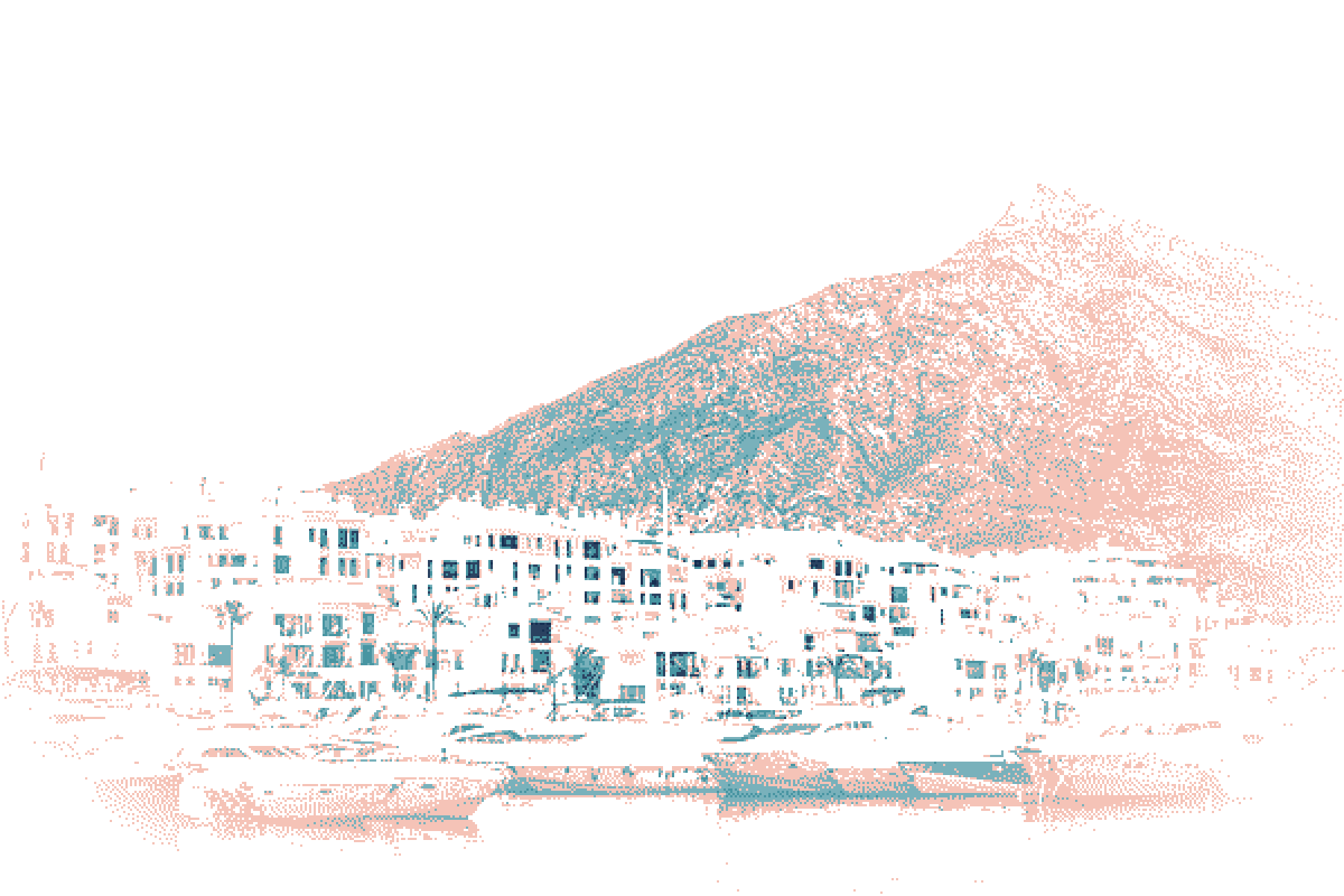
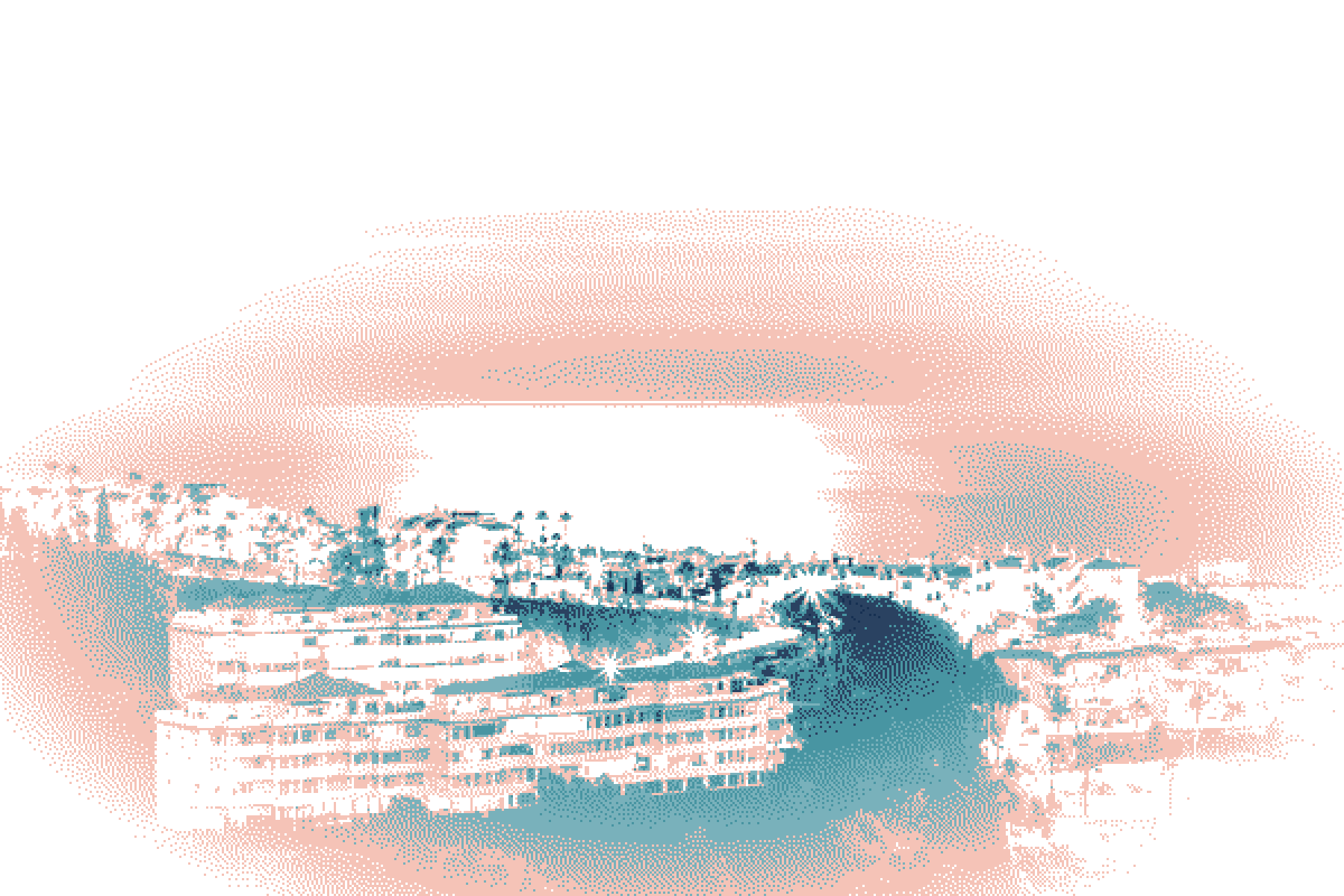
Cabopino is not a gated estate or a branded residence. It is a compact coastal area on Marbella’s eastern edge, centred on Puerto Cabopino, a 249-berth marina that is deliberately smaller and quieter than Puerto Banús. The marina sits behind a protected dune system, the Dunas de Artola, declared a Natural Monument by the Junta de Andalucía under Decreto 250/2003. Pine forest rises immediately behind the coast, and wooden walkways cross the dunes to the beach. The Torre Ladrones, a historic watchtower listed as a Bien de Interes Cultural, stands at the dune edge. This is a zone where the natural environment is the dominant feature, not the built environment.
That environmental protection is the key constraint on supply. The dunes and the pine forest are protected, which means the building envelope is finite and largely built out. Most stock is established resale: apartments and townhouses near the marina, and villas on the pine-forested hillside above. New-build villa development is rare here, which is why the new-build villa figure is n/a this month. A buyer looking at Cabopino is looking at a limited, mostly existing stock in a protected setting, not a zone of cranes and off-plan launches.
The lifestyle is correspondingly low-key. The marina has restaurants and chiringuitos rather than nightclubs and luxury boutiques. Cabopino Golf Marbella, a course designed by Juan Ligues, sits inland behind the pine forest, adding a golf element to the zone’s draw. The nudist beach at Artola draws a specific visitor cohort. The overall atmosphere is the opposite of the Golden Mile or Puerto Banús: discreet, natural and unhurried. For a broader picture of how this east Marbella corridor fits alongside the villa strips and hillside zones, see the Los Monteros and East Marbella buyer guide.
Who buys in Cabopino and what sets the price level?
The buyer profile splits into two cohorts. The first is Northern European second-home owners, primarily UK, Scandinavian and German, who want the Marbella address without the intensity of the western marina circuit. They are drawn by the protected coastline and the pine forest, which deliver a quieter day-to-day than the more developed stretches of the coast. The second is Spanish families buying for year-round living, attracted by the natural setting, the relative calm and the proximity to Marbella town. The marina-lifestyle buyer prioritises walking distance to restaurants and the harbour; the quiet-residential buyer prioritises the pine-forested hillside streets above the coast. Both are buying into a finite, protected environment where supply will not expand significantly.
Prices are set by three factors specific to this zone. First, the protected dunes and pine forest limit the building envelope, so supply is constrained and the stock that exists carries a scarcity premium. Second, the marina and the golf course provide amenities that support demand without the premium that a Puerto Banús address commands. Third, the Marbella municipal boundary means the zone carries the Marbella address, which matters for international buyers who want that association. The combination of constrained supply, moderate amenity draw and the Marbella label places Cabopino in a mid-market position within the Marbella price hierarchy: above the Mijas zones to the east, below the prime west-Marbella addresses and below the Las Chapas villa strip to the west.
The apartment figure of 3,514 EUR/m2 sitting below the villa figure of 4,140 EUR/m2 is the normal pattern for a zone where the villas sit on larger pine-forested plots and the apartments are near the marina. This is the standard Marbella configuration, and it tells you that the villa stock here carries the plot and land value that drives the per-square-metre premium. The roughly 18 per cent gap between the two property types is narrower than in some Marbella zones, reflecting the fact that both stock types benefit from the protected natural setting.
How does Cabopino compare to its neighbouring zones?
Cabopino occupies a specific geographic position: it is the last Marbella zone before the Mijas municipal boundary, with Elviria to the west and Sitio de Calahonda to the east. This location makes it a gateway zone, and the notarial data reflects that positioning. The table below sets Cabopino against its adjacent east-Marbella and Mijas zones on the same notarial measure, like-for-like registered closings rather than asking prices.
| Zone (municipality) | All types (EUR/m2) | Apartments (EUR/m2) | Resale villas (EUR/m2) | Gap vs Cabopino (all types) |
|---|---|---|---|---|
| Cabopino (Marbella) | 3,707 | 3,514 | 4,140 | baseline |
| Sitio de Calahonda (Mijas) | 2,900 | 2,827 | 3,038 | roughly 28 per cent below |
| Elviria (Marbella) | 3,865 | 3,691 | 4,128 | roughly 4 per cent above |
| Costabella (Marbella) | 4,223 | 4,524 | 4,051 | roughly 14 per cent above |
| Rio Real and Los Monteros (Marbella) | 4,265 | 4,177 | 4,504 | roughly 15 per cent above |
| Las Chapas (Marbella) | 5,093 | 4,027 | 6,929 | roughly 37 per cent above |
Source: listyco notarial data, 2026-06 (Consejo General del Notariado). All zones are the same cache month, like-for-like registered closing prices. The Cabopino row is the zone baseline; neighbouring zone figures are the same notarial measure for the same month.
The comparison reveals a clear price ladder running east to west. To the east, Sitio de Calahonda in Mijas registers roughly 28 per cent below Cabopino on all types, reflecting its Mijas address and value-oriented stock. To the west, Elviria runs roughly 4 per cent above Cabopino, with a broader amenity base and a wider range of mid-luxury urbanizations. Further west, Costabella and the Rio Real and Los Monteros zone sit roughly 14 to 15 per cent above, and Las Chapas runs roughly 37 per cent above on all types, driven by its high-value villa stock. A buyer moving west along this corridor is paying progressively more for beachfront proximity, established urbanization infrastructure and larger villa plots.
A notable pattern in the villa line: Cabopino’s resale villa figure of 4,140 EUR/m2 is almost identical to Elviria’s on the same notarial measure, despite the roughly 4 per cent all-types gap between the two zones. This is because Elviria’s all-types headline is lifted by its broader apartment mix, while the villa stock in both zones commands a similar per-square-metre figure. A villa buyer choosing between Cabopino and Elviria is weighing character (Cabopino’s protected natural setting against Elviria’s established urbanization landscape) rather than a large villa-price differential. For the full Mijas and Fuengirola context, including how the value coast compares to Marbella, see the Mijas and Fuengirola buyer guide. For the adjacent Mijas zone comparison, see the Sitio de Calahonda prices page, and for the prime westward step-up, the Las Chapas prices page and the Elviria prices page.
Why are registered notarial prices lower than asking prices?
Registered notarial prices are lower than both asking prices and valuation estimates because they record every signed transaction across the full mix of resales and transfers, rather than the prime, newly listed stock that sets the headlines. A model estimate from listyco market-stats puts current Cabopino valuations around 5,253 EUR/m2 (model estimate, not a sale price). Asking prices on portals run higher still (asking, not closing). The 3,707 EUR/m2 registered average is the figure that reflects completed sales.
The two numbers measure different things. The notarial figure is a closing price; the model estimate is a current-value estimate across the standing stock. The gap between them is wider than in some zones because Cabopino’s protected setting means the standing stock carries a natural-environment premium that the transaction mix, which includes older resales, does not fully capture. A buyer who anchors to the registered average and adjusts up for a pine-view villa or a frontline-marina apartment is working from what the market did, not what it hopes to do.
How does the wider Spanish market affect Cabopino in 2026?
For the broader Marbella context, Tinsa’s IMIE valuation index puts the average finished-housing price in Marbella municipality at 3,694 EUR/m2 in the second quarter of 2026, up 18.31 per cent year-on-year (Tinsa, IMIE Mercados Locales, Q2 2026, on Tinsa’s valuation index). That Marbella-wide figure covers the entire municipality, including lower-priced inland areas, which is why the Cabopino zone-specific registered average of 3,707 EUR/m2 sits just above it. The national quarterly trend, measured by Tinsa’s IMIE Mercados Locales index, registered a 3.7 per cent quarterly advance and a 15.2 per cent annual rise in Q2 2026, the highest annual rate since the third quarter of 2006 and 11.8 points above general inflation (Tinsa, IMIE Mercados Locales, Q2 2026, published 30 June 2026).
The INE Housing Price Index for Q1 2026 reported an annual rate of 12.9 per cent nationally, with second-hand homes up 13.5 per cent and new homes up 9.1 per cent, and a quarterly advance of 3.5 per cent (INE, IPV, Q1 2026). The second-hand figure is the relevant one for Cabopino, where the stock is almost entirely resale and the new-build villa figure is n/a. The direction is clear: registered closing prices in Cabopino sit at the municipal average, while the wider market context shows a Marbella-wide valuation surge running well ahead of the national rate.
How should a buyer read Cabopino’s numbers?
Use the registered notarial figure as your floor of reality: it is what comparable homes actually closed at. Treat asking prices as the seller’s opening position and the model estimate as a valuation guide for the standing stock. A buyer who anchors a negotiation to the 3,707 EUR/m2 registered average, then adjusts up for a pine-view position, a marina-front location or a turnkey renovation, is working from what the market did rather than what it hopes to do.
The n/a new-build villa figure is itself a signal. In a zone where the protected dunes and pine forest limit new construction, the absence of registered new-build villa sales tells you that the villa stock is established resale, not fresh development. That has implications for a buyer: you are buying into a finite, protected environment where supply will not expand significantly, which is the structural argument for price stability over time. For rental potential, the Marbella rental yield guide shows that marina-side zones with natural amenities command strong seasonal rents. For the full acquisition-cost breakdown, see the cost of buying guide.
For the quarterly Marbella and Costa del Sol market picture, including transaction volumes and price trends across the region, the Costa del Sol quarterly market tracker provides the wider data context. For the beachfront east-Marbella neighbour, the Costabella prices page rounds out the east-Marbella zone picture.
Frequently asked questions
- What is the average price per m2 in Cabopino in 2026?
- Registered notarial sales averaged 3,707 EUR/m2 across all property types in June 2026, with apartments at 3,514 EUR/m2 and resale villas at 4,140 EUR/m2 (listyco notarial data, Consejo General del Notariado). These are real closing prices at the notary, not asking prices.
- How does Cabopino compare to neighbouring Elviria?
- Cabopino registered 3,707 EUR/m2 across all types, roughly 4 per cent below the 3,865 EUR/m2 registered in neighbouring Elviria on the same notarial measure (listyco notarial data, 2026-06, Consejo General del Notariado). Elviria carries a broader range of mid-luxury urbanizations and amenities, while Cabopino is a smaller, more environmentally protected enclave where the dunes and pine forest limit the building envelope.
- How does Cabopino compare to Sitio de Calahonda?
- Cabopino registered 3,707 EUR/m2 across all types, roughly 28 per cent above the 2,900 EUR/m2 registered in Sitio de Calahonda in Mijas on the same notarial measure (listyco notarial data, 2026-06, Consejo General del Notariado). Cabopino sits within Marbella municipality and carries the Marbella address premium, while Calahonda is a larger, more value-oriented zone in Mijas.
- Why are registered prices lower than the asking prices I see online?
- Asking prices are what sellers list. Registered notarial prices are what buyers and sellers actually signed for at the notary, across the full mix of resales and transfers. The registered average is the more reliable signal of what changed hands, and it sits below asking-price headlines because it includes older stock and non-prime transactions.
- How much do new-build villas cost in Cabopino?
- For June 2026 the new-build villa figure is n/a for the zone: there were too few registered new-build villa transactions to publish a reliable price, so no number is shown rather than an estimate. The protected dune and pine forest constraints limit new-build villa development here.
Sources and data
- Centro de Informacion Estadistica del Notariado (notarial transaction statistics) — Consejo General del Notariado
- Precio vivienda en la ciudad de Marbella — Tinsa
- IMIE Mercados Locales, 2º trimestre 2026: +15,2% — Tinsa
- Housing Price Index (HPI), First Quarter 2026 — INE
- Monumento Natural Dunas de Artola o Cabopino — Junta de Andalucia