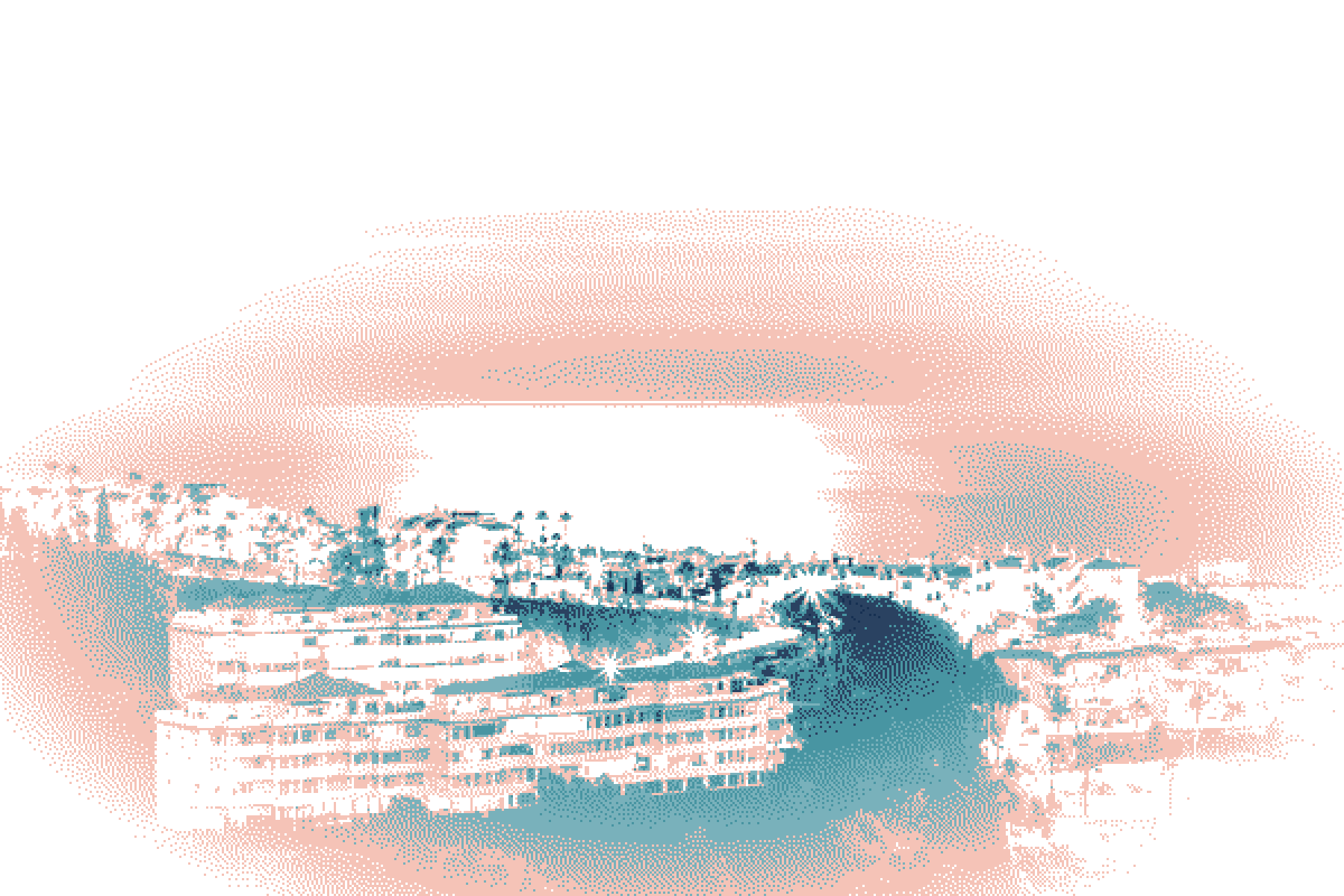

Plaza de Toros Property Prices in 2026: Notarial EUR/m2 in Marbella's Central Eastern District
Registered notarial sale prices for the Plaza de Toros district of central Marbella in July 2026: what apartments actually sold for, not asking prices.
In the Plaza de Toros district of central Marbella, the registered sale price, what buyers actually paid at the notary, averaged 2,289 EUR/m2 across all property types in July 2026, with apartments at 2,250 EUR/m2 (listyco notarial data, 2026-07, Consejo General del Notariado). Villa prices are n/a for the zone this month. The detail that defines this zone: it is an apartment-dominant urban core where buyers trade land size and sea views for walkable proximity to the old town, the Alameda park and the beach, at a price point well below Marbella’s beachfront premium zones.
What did property actually sell for in the Plaza de Toros district in 2026?
Registered notarial sales averaged 2,289 EUR/m2 across all property types in July 2026: 2,250 EUR/m2 for apartments (listyco notarial data, Consejo General del Notariado). Villa, new-build villa and resale villa figures are all n/a this month. These are the prices recorded at the notary when a deed is signed, the most reliable public signal of what a home in this central Marbella district actually changed hands for.
| Property type | Registered price (EUR/m2), Plaza de Toros, July 2026 |
|---|---|
| All property types | 2,289 |
| Apartments | 2,250 |
| Resale villas | n/a |
| New-build villas | n/a |
Source: listyco notarial data, 2026-07 (Consejo General del Notariado). Villa figures are n/a because the district is apartment-dominant urban stock with no villa supply, so too few registered villa transactions fell in the zone this month to report a reliable figure.
What changed between June and July 2026?
The notarial figures for the Plaza de Toros district held flat from June to July 2026. Both the all-types average (2,289 EUR/m2) and the apartment figure (2,250 EUR/m2) were identical across the two months, and the villa figures remained n/a. A zone holding its registered price level month-on-month within a double-digit rising market is absorbing the regional uplift at its current value point rather than pushing higher.
This zone-level stability sits within a strongly rising provincial and national market. Tinsa’s IMIE Mercados Locales index reported 15.2 per cent year-on-year growth nationally in the second quarter of 2026, the highest rate since the third quarter of 2006 (Tinsa, IMIE Mercados Locales Q2 2026, published 30 June 2026). The general IMIE index reached 15.6 per cent year-on-year in June 2026 (Tinsa, IMIE June 2026, published 14 July 2026), and the INE Housing Price Index stood at 12.9 per cent year-on-year in the first quarter of 2026 (INE, IPV Q1 2026). The contrast between flat local prices and double-digit provincial growth suggests that the Plaza de Toros district’s central urban stock is trading at a level where further month-on-month appreciation is slower than in catch-up zones, a pattern typical of consolidated urban cores with limited new supply.
What kind of place is the Plaza de Toros district and who buys there?
The Plaza de Toros district is the central residential area around Marbella’s historic bullring, positioned at the eastern edge of the old town. The bullring itself, opened in 1964, sits near the ring road and serves as the landmark that names the zone. From here, the old town’s narrow streets, orange-tree squares and tapas bars are a short walk west, while the Alameda park, Marbella’s central green space, lies between the district and the beachfront promenade to the south.
Avenida Ricardo Soriano, the avenue that runs through the heart of Marbella from east to west, linking the city’s main entrances with the old town and the seafront promenade, forms the district’s commercial spine. The avenue divides Marbella into the beachside area and the inland section, and the Plaza de Toros district sits on the inland side, giving residents street-level shops, banks and cafes without the beachfront premium. The district is a transitional zone between the historic centre and the beachfront communities to the east, which is why its stock is apartment-block residential rather than the villa or penthouse typologies that define the coastal zones.
The buyer profile reflects this central, practical position. The district appeals to Spanish families and long-term residents who prize old-town proximity and the convenience of walking to the municipal market, the pharmacies and the schools, without needing a car for daily errands. It also attracts international buyers seeking a genuine Marbella-town base rather than a resort enclave: buyers who want the paseo, the old town’s restaurants and the cultural calendar rather than a gated community with a pool. The apartment stock here is practical rather than trophy, and the per-square-metre figure reflects that positioning. Marbella’s population reached 166,999 at the end of 2024 according to the town hall’s padron figures, with nearly 90 per cent of new residents arriving from outside Spain, and the central districts absorb much of that year-round demand.
Why are there no villa prices in the Plaza de Toros district?
The absence of villa figures is structural, not a data gap. Three factors explain it.
The zone is apartment-block urban stock. The Plaza de Toros district is part of Marbella’s consolidated urban core, built out with apartment buildings along Avenida Ricardo Soriano and the surrounding streets. There are no villa plots, no detached housing estates and no land available for villa development in this position. The notarial data reflects what actually transacts, and what transacts here is apartments.
The urban core is built out. Unlike the Golden Mile or the hillside zones where villa plots sit alongside apartments, the central districts were developed decades ago as dense residential blocks. New construction in this position is renovation and replacement of existing apartment buildings, not villa development. The n/a for new-build villas signals that this is a renovation market within an established apartment typology, not a zone where villa supply exists at any price point.
The data correctly reports the absence. The villa, new-build villa and resale villa figures are all null for this zone, which accurately reflects the apartment-only transaction volume. A reader evaluating this zone should understand that the n/a is the answer, not a missing data point: there is no villa market here to price.
How does the Plaza de Toros district compare to neighbouring zones?
The Plaza de Toros district sits at the value-conscious end of the central Marbella constellation. Among five neighbouring zones on the same notarial measure (listyco notarial data, 2026-07, Consejo General del Notariado), the Plaza de Toros district is the cheapest on the all-types figure in every comparison.
| Neighbouring zone | All-types gap vs Plaza de Toros | Apartment gap vs Plaza de Toros | Resale villa gap vs Plaza de Toros |
|---|---|---|---|
| Divina Pastora | 23 per cent above | 25 per cent above | n/a (both zones null) |
| Marbella Centro | 43 per cent above | 31 per cent above | n/a (Plaza de Toros null) |
| Torrecilla-La Canada | 48 per cent above | 49 per cent above | n/a (both zones null) |
| Montealto | 49 per cent above | 55 per cent above | n/a (Plaza de Toros null) |
| Playa Bajadilla-Puertos | 108 per cent above | 111 per cent above | n/a (Plaza de Toros null) |
Source: listyco notarial data, 2026-07 (Consejo General del Notariado). Gaps expressed as percentage differences to avoid printing raw neighbour figures. Villa comparisons are n/a where the Plaza de Toros district has no villa transactions to compare.
The hierarchy tells a clear story. Divina Pastora, the closest neighbour at 23 per cent above, is also apartment-dominant and sits just inland of the district. Marbella Centro, the historic core immediately to the west, registers 43 per cent above on the all-types measure but only 31 per cent above on apartments, because Marbella Centro has a villa component that pulls its all-types average upward while the Plaza de Toros district does not. Torrecilla-La Canada, to the north, is 48 per cent above. Montealto, in neighbouring Benalmádena, is 49 per cent above and carries a villa stock that the Plaza de Toros district entirely lacks.
The sharpest gap is with Playa Bajadilla-Puertos, Marbella’s port-edge beachfront zone, which registers 108 per cent above the Plaza de Toros district on the all-types measure. Buyers weighing the Plaza de Toros district against Playa Bajadilla are choosing between walkable old-town proximity at less than half the per-square-metre cost and beachfront prestige with direct port access. The Marbella Golden Mile property prices guide covers the beachfront zone in detail.
Marbella’s registered prices grew 20.53 per cent year on year in the first quarter of 2026, to an average of 3,641 EUR/m2 (Tinsa), against a national year-on-year rate of 15.2 per cent in the second quarter (Tinsa IMIE Mercados Locales, Q2 2026, published 30 June 2026), the highest national rate since the third quarter of 2006. The Plaza de Toros district’s notarial figure sits well below the Marbella municipal average, reflecting its inland urban-core position without the beachfront or Golden Mile premium.
What is the gap between registered and asking prices?
Asking prices on listing portals regularly sit above registered sale prices across the Costa del Sol, because sellers list optimistically and negotiated discounts, financing conditions and time-on-market pressures pull the final notarial figure down. The Plaza de Toros district is no exception. A model estimate places current valuations at 8,256 EUR/m2 across the broader Plaza de Toros-La Ermita pocket (listyco market-stats, model estimate, not a sale price), well above the notarial sale figure of 2,289 EUR/m2. The gap reflects two different measures: the notarial figure captures what actually closed at the notary this month, while the model estimate reflects the broader standing stock and current listing sentiment. Buyers should treat the notarial figure as the ground-truth comparable and the model estimate as a valuation context, never confusing the two.
For buyers evaluating a property in the Plaza de Toros district, the notarial figure is the benchmark. A seller asking substantially above the registered per-square-metre rate for a comparable apartment is pricing above what the market has actually delivered at the notary, and the negotiation should reflect that. The cost of buying guide covers the full acquisition cost structure, and the Marbella rental yields guide covers what buy-to-let actually returns by area for owners considering letting.
What drives prices in the Plaza de Toros district up or down?
Three factors move the needle in this specific zone.
Central walkability scarcity. The Plaza de Toros district is one of the few places in Marbella where a resident can walk to the old town, the Alameda park, the beach promenade and the main commercial avenue without a car. That walkable urban core is fixed: the street grid is centuries old, the old town is protected, and new apartment supply in a consolidated centre is limited to renovation and replacement. As demand for genuine Marbella-town living grows among both Spanish families and international relocators, the scarcity of central apartment stock supports the registered price level.
Tourist rental demand. The proximity to the old town and the beach promenade makes the district’s apartments attractive for short-term letting, which supports capital values for investor buyers. Owners must comply with Andalusia’s VFT registration requirement and the 60 per cent community-of-owners approval rule introduced in February 2025, but the underlying demand from visitors who want a central Marbella base rather than a resort remains structural. When tourist occupancy is strong, investor competition for central apartments pushes asking prices up, though the notarial figure lags behind as the negotiated outcome.
Avenida Ricardo Soriano commercial pull. The avenue is Marbella’s primary shopping street, and apartments within walking distance of its retail and service density carry a practical premium over properties in quieter residential streets further from the centre. The commercial vitality of the avenue, maintained by year-round resident footfall rather than seasonal tourist traffic alone, gives the district a price floor that pure resort zones lack. When the commercial core draws more businesses and footfall, the surrounding residential stock benefits from the amenity uplift at a lower entry point than the beachfront itself.
Frequently asked questions
- What is the average price per m2 in the Plaza de Toros district of Marbella in 2026?
- Registered notarial sales averaged 2,289 EUR/m2 across all property types in July 2026, with apartments at 2,250 EUR/m2 (listyco notarial data, Consejo General del Notariado). That is what actually closed at the notary, not an asking price. The all-types figure sits just above the apartment figure because the zone is apartment-dominant.
- Why are there no villa prices for the Plaza de Toros district?
- The villa, new-build villa and resale villa figures are all n/a for this zone in July 2026. The Plaza de Toros district is an apartment-dominant urban core around Marbella's old bullring, with apartment-block stock and no villa supply, so too few registered villa transactions fell in the zone to report a reliable figure. No number is shown rather than an estimate.
- Did prices change between June and July 2026?
- The notarial figures held flat from June to July 2026: both all-types (2,289 EUR/m2) and apartments (2,250 EUR/m2) were identical across the two months. This zone-level stability sits within a strongly rising provincial market where Tinsa reported 15.2 per cent year-on-year growth nationally in Q2 2026, the highest rate since Q3 2006, suggesting the district is absorbing the regional uplift at its current value point rather than pushing higher month-on-month.
- How does the Plaza de Toros district compare to other Marbella zones?
- The Plaza de Toros district registers below Marbella's beachfront and Golden Mile zones on the same notarial measure (listyco notarial data, 2026-07), because it is inland urban stock without direct beach access or sea views. Among five neighbouring central Marbella zones, it is the cheapest on the all-types measure: 23 per cent below Divina Pastora, 43 per cent below Marbella Centro and 48 per cent below Torrecilla-La Canada.
- What is the difference between the notarial figure and the model estimate?
- The notarial figure (2,289 EUR/m2) is a registered sale price recorded at the notary. The market-stats figure (8,256 EUR/m2) is a model estimate of current valuation across the standing stock, a different measure, which is why the two differ. Both are labelled so you can compare like with like.
- Is the Plaza de Toros district a good area for rental investment?
- The central walkable position and tourist demand from the old town proximity support short-let appeal, though owners must comply with Andalusia's VFT registration and 60 per cent community approval rules. The Marbella rental yields guide covers what buy-to-let actually returns by area for owners considering letting.
Sources and data
- Centro de Informacion Estadistica del Notariado (notarial transaction statistics) — Consejo General del Notariado
- Precio vivienda en la ciudad de Marbella — Tinsa
- IMIE Mercados Locales 2 trimestre 2026: +15,2% — Tinsa
- IMIE Junio 2026: +15,6% — Tinsa
- Cifras oficiales de poblacion de los municipios espanoles: Revision del Padron Municipal — INE
- El Padron de Marbella mantiene su crecimiento sostenido de los ultimos anos y se situa en 166.999 habitantes a finales de 2024 — Ayuntamiento de Marbella