
Marbella Pueblo Property Prices in 2026: Notarial EUR/m2 in the Historic Heart
Registered notarial prices per m2 for Marbella Pueblo in 2026: apartments, villas and new-build figures with adjacent-zone comparisons against the Golden Mile.
Marbella Pueblo is the historic heart of the city, and its registered prices show it: sales averaged 3,630 EUR/m2 across all property types in June 2026, with apartments at 3,904 EUR/m2 and villas at 3,422 EUR/m2 (listyco notarial data, 2026-06, Consejo General del Notariado). Those are closing prices recorded at the notary, not asking prices, and they tell a story of a fixed-supply old town where heritage protection and walkability set the floor. The all-types average sits well below the beachfront prime strip and roughly 15 per cent below the resort enclave of Nueva Andalucía, yet about 5 per cent above the working town of San Pedro de Alcántara, making the heritage premium over the working towns and the resort premium above the old town quantifiable rather than asserted. The full zone comparison table below sets out the exact registered figures for each neighbouring zone.
What did property actually sell for in Marbella Pueblo in 2026?
Registered notarial sales averaged 3,630 EUR/m2 across all types in June 2026: 3,904 EUR/m2 for apartments and 3,422 EUR/m2 for villas (listyco notarial data, Consejo General del Notariado). Within the villa figure, new-build villas registered at 5,125 EUR/m2 against 3,063 EUR/m2 for resale, the clearest single signal that the few modern builds permitted on the fringes of the historic core command a sharp premium.
| Property type | Registered price (EUR/m2), Marbella Pueblo, June 2026 |
|---|---|
| All property types | 3,630 |
| Apartments | 3,904 |
| Villas (all) | 3,422 |
| New-build villas | 5,125 |
| Resale villas | 3,063 |
Source: listyco notarial data, 2026-06 (Consejo General del Notariado).
For context, the INE Housing Price Index for the first quarter of 2026 put Spanish second-hand housing at 13.5 per cent year-on-year growth, outpacing new homes at 9.1 per cent (INE, HPI Base 2025, Q1 2026). Marbella Pueblo’s stock is overwhelmingly second-hand resale within protected fabric, so that national resale trend is the relevant macro signal for where the old town’s registered figures are heading. The Tinsa IMIE General Index for June 2026 recorded 15.6 per cent year-on-year growth across all Spanish housing, with metropolitan areas leading at 17.3 per cent (Tinsa, IMIE June 2026), confirming that the broad market conditions remain strongly upward even as the old town’s fixed supply dampens volatility.
How does Marbella Pueblo compare to its neighbours?
Marbella Pueblo sits between the more expensive resort strip and the cheaper working towns, and the June 2026 notarial data makes the step-ups and step-downs precise. Comparing all-types registered averages from the same notarial dataset:
| Zone | All-types EUR/m2, June 2026 | Difference vs Marbella Pueblo |
|---|---|---|
| Marbella Golden Mile | 6,343 | +74.8% above Pueblo |
| Sierra Blanca | 6,089 | +67.7% above Pueblo |
| Nagüeles | 4,539 | +25.0% above Pueblo |
| Nueva Andalucía | 4,293 | +18.3% above Pueblo |
| Marbella Pueblo | 3,630 | baseline |
| San Pedro de Alcántara | 3,447 | -5.0% below Pueblo |
Source: listyco notarial data, 2026-06 (Consejo General del Notariado). Each zone figure is the all-types registered average for that zone in the same notarial dataset.
The apartment comparison is starker. Marbella Pueblo apartments register roughly 49 per cent below Golden Mile apartments and about 15 per cent below Nueva Andalucía apartments, but roughly 19 per cent above San Pedro apartments, all from the same June 2026 notarial dataset. The villa picture flips: Pueblo villas register roughly 45 per cent below Sierra Blanca villas and about 31 per cent below Nagüeles villas, because the hillside zones hold the prime villa stock while Pueblo’s villa figure captures older fringe housing rather than luxury compounds. The full apartment and villa breakdowns for each neighbouring zone are available in the dedicated zone data posts linked below.
A buyer comparing Marbella Pueblo to San Pedro de Alcántara is choosing heritage and walkability over space and schools, paying roughly 5 per cent more for the old-town address. A buyer comparing it to the Golden Mile is choosing authenticity over beachfront prime, paying well under half the registered average. The registered baseline for Pueblo is the honest midpoint: above the working towns, below the resort pockets, and firmly anchored by the fact that nobody is building more of it. For the neighbouring data, see the San Pedro de Alcántara property prices post and the Marbella Golden Mile property prices post.
Why do apartments register above villas in the old town?
The inversion, with apartments at 3,904 EUR/m2 sitting above the all-villa figure of 3,422 EUR/m2, is unusual on this coast and it has a structural cause. Marbella’s old town is a designated historic centre, declared by the Ayuntamiento as part of its protected patrimonio, and the narrow streets, listed facades and archaeological sensitivity make new development effectively impossible within the walls. The stock of apartments is fixed, small and overwhelmingly resale, so town-centre flat scarcity, not land size, is the binding constraint. Buyers who want to walk to the Plaza de los Naranjos, the Iglesia de la Encarnacion and the Alameda park are paying for a position that cannot be replicated, and the registered apartment figure reflects that scarcity premium.
The villa figure, by contrast, captures the broader fringe around the old core, including older resale houses and the handful of new builds allowed on the edges, which is why the resale villa average of 3,063 EUR/m2 pulls below the apartment line while new-build villas at 5,125 EUR/m2 sit well above it. The gap between those two villa figures is the widest split in any Marbella zone we track, a direct measure of how scarce planning permission is within and around the protected core.
What is Marbella Pueblo and who buys there?
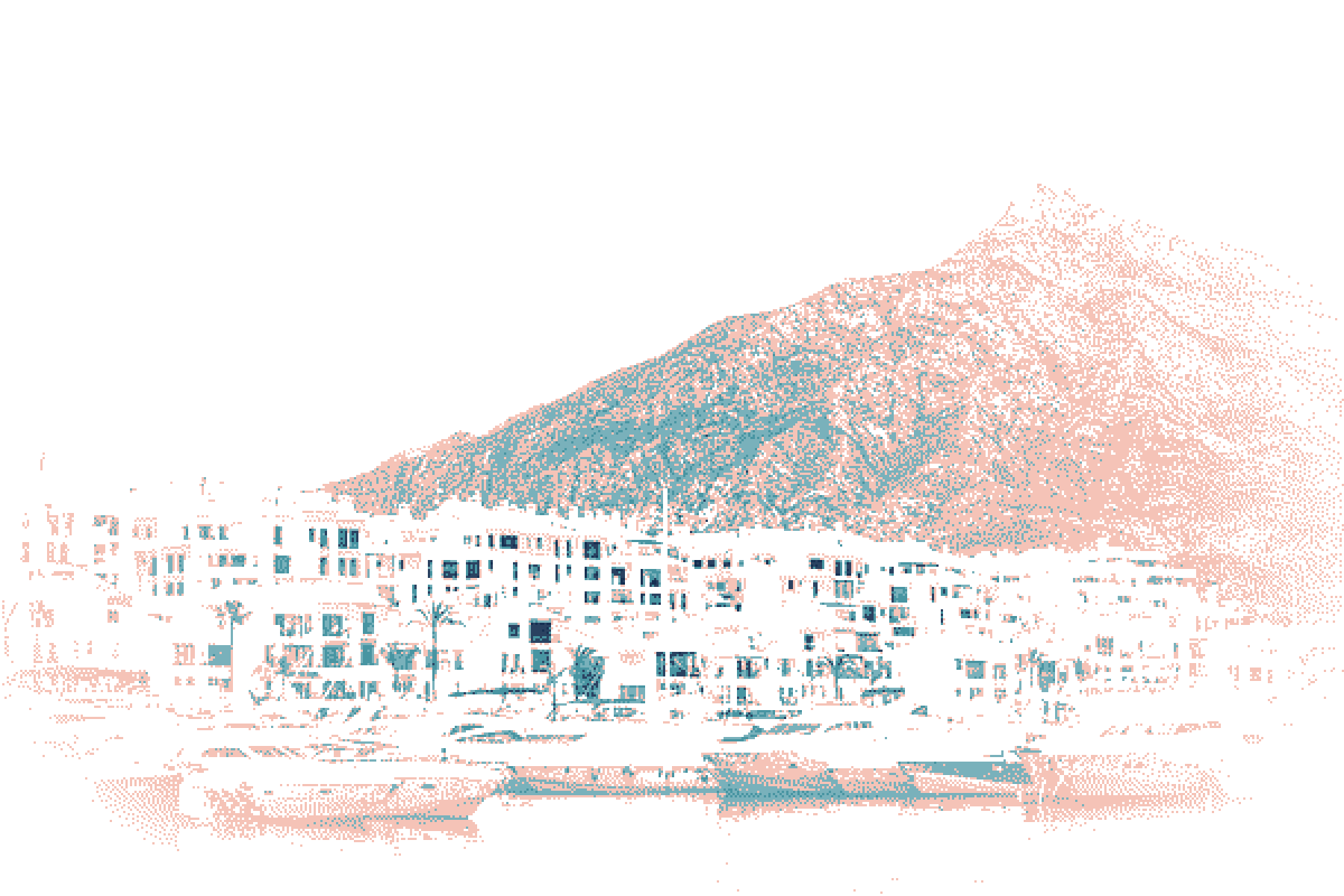
Marbella Pueblo is the casco antiguo, the original settlement above the coast road, a network of whitewashed lanes, small squares and the remains of the Arab wall and castle that predate the resort city most visitors know. The Ayuntamiento’s culture pages describe a centre where Roman, Arab and Christian layers sit one on top of the other, centred on the Iglesia de Nuestra Senora de la Encarnacion and the Plaza de los Naranjos. Unlike the gated resort zones west of town, this is a lived-in quarter with tapas bars, artisan shops and year-round residents, and it is where the city’s municipal government sits.
The buyer profile follows the place. Buyers are lifestyle-led relocators and second-home owners who want to walk to cafes and cultural life rather than live behind a gate, and they are willing to accept older stock, narrow streets and tight parking to get it. The audience skews to European professionals and HNW owners who already know Marbella and are trading resort glamour for authenticity and centrality. Investors are fewer here than in the beachfront zones because the rental regime is tighter and the holiday-let supply is smaller, which is part of why the registered figures reflect owner-occupier demand more than yield chasing. The 2025 tourist-let reforms, which added the LPH three-fifths community approval requirement and the Andalusian municipal compatibility licence, further constrain short-let income in a building stock dominated by small resident-occupied communities.
Will the new Marbella PGOU change the supply picture?
The Ayuntamiento de Marbella is drafting a new Plan General de Ordenacion Urbanistica (PGOU) to replace the 2010 plan that was subject to a legal nullity dictamen in 2018, and the Delegacion de Urbanismo has published the advance documents and public participation programme. The key point for the old town is that the casco historico’s protected status derives from heritage law and municipal patrimonio declarations, not from the general urban plan, so any PGOU revision tightens rather than loosens the historic-centre development limits. The fixed-supply dynamic that underpins the apartment scarcity premium is structural, not a planning footnote that a new plan could rewrite.
For a buyer weighing timing, this means the registered figures are unlikely to be diluted by a wave of new supply. The risk runs the other direction: if the new PGOU introduces stricter conservation requirements or expands the protected perimeter, the developable fringe shrinks further and the new-build villa figure of 5,125 EUR/m2 becomes even more of a rarity signal.
How a buyer should read these numbers
Treat the 3,630 EUR/m2 registered average as the reality check on any Marbella Pueblo listing. The old town rewards buyers who separate the genuinely renovated properties within the historic fabric, where the scarcity premium is real, from the older unrenovated stock that holds the resale villa average down. The new-build villa figure of 5,125 EUR/m2 reflects the few modern schemes permitted on the fringes, not a broad new-build market, so do not expect that figure to scale across the quarter. For the wider picture, see the neighbouring San Pedro de Alcántara data post for the working-town comparison, the Marbella rental yields guide for the income angle, and the cost of buying property in Spain guide for the full acquisition-cost breakdown.
Frequently asked questions
- What is the average price per m2 in Marbella Pueblo in 2026?
- Registered notarial sales averaged 3,630 EUR/m2 across all property types in June 2026: 3,904 EUR/m2 for apartments and 3,422 EUR/m2 for villas (listyco notarial data, Consejo General del Notariado). That is the price recorded at the notary, not an asking price or an index estimate.
- How does Marbella Pueblo compare to the Golden Mile and San Pedro?
- Marbella Pueblo's registered average sits well below the Golden Mile and roughly 15 per cent below Nueva Andalucía, but about 5 per cent above San Pedro de Alcántara. You buy the heritage address and walkability at a sharp discount to the beachfront prime strip but above the working towns. The full zone comparison table below sets out the exact figures.
- Why are apartments more expensive than villas in Marbella Pueblo?
- The old town is a declared historic centre with strict development limits, so the supply of apartments within the walls is fixed and small. Apartments at 3,904 EUR/m2 register above the all-villa figure of 3,422 EUR/m2 because town-centre flat scarcity, not land size, is the binding constraint here.
- Who buys property in Marbella Pueblo?
- Buyers tend to be lifestyle-led relocators and second-home owners who want to walk to cafes, the Alameda park and the old town squares rather than live in a gated resort. The stock is older, the streets narrow, and parking is tight, so the profile favours charm and centrality over space and security.
- Is the Marbella PGOU going to change development rules in the old town?
- The Ayuntamiento de Marbella is drafting a new Plan General de Ordenacion Urbanistica to replace the annulled 2010 PGOU, but the casco historico's protected status is anchored in heritage law, not the general plan. Any revision tightens rather than relaxes the historic-centre development limits, so the fixed-supply dynamic that underpins apartment prices is structural.
Sources and data
- Centro de Informacion Estadistica del Notariado (notarial transaction statistics) — Consejo General del Notariado
- Casco Historico de Marbella (patrimonio) — Ayuntamiento de Marbella
- Housing Price Index (HPI), Base 2025, First Quarter 2026 — INE
- Tinsa IMIE General Monthly Index, June 2026 — Tinsa
- Nuevo Plan General de Ordenacion Urbanistica de Marbella — Ayuntamiento de Marbella, Delegacion de Urbanismo